How Dust Bowl migration routes reshaped California politics
Dust Bowl migration routes did more than move people; they transported ideas, habits, and hopes that would recast California’s political map. Families fleeing failed farms carried New Deal loyalties and church-centered culture into a state already wrestling with growth. To trace how this happened, we need both economics and memory—from the Great Depression key lessons to the history of Labor Day in the U.S.. What began as survival along Route 66 soon influenced school boards, water fights, union drives, and statewide elections. The road west changed who voted, how they organized, and which issues came to define the Golden State.
Historical Context
From drought and debt to the open road
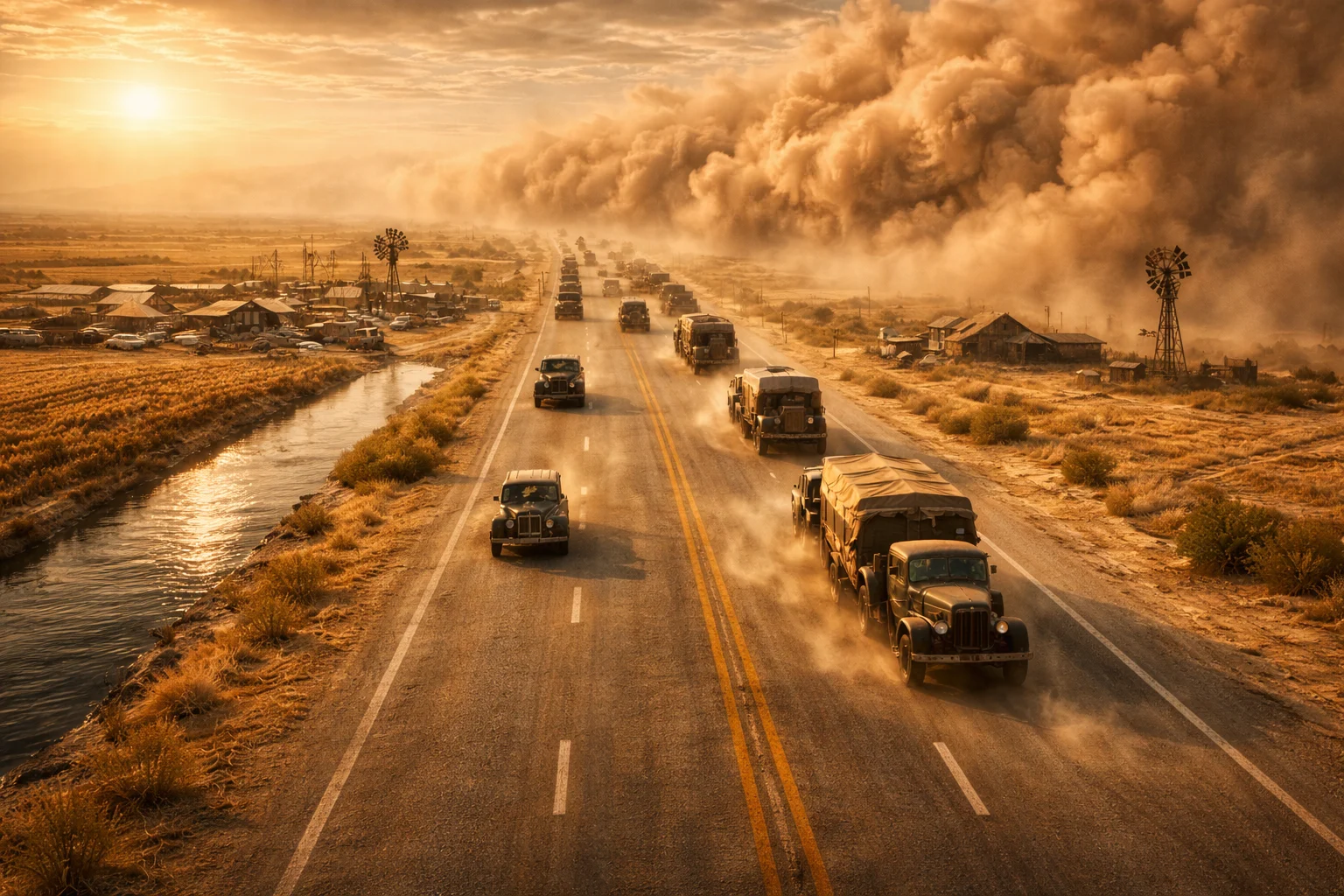
By the early 1930s, dust storms, collapsing crop prices, and bank foreclosures squeezed the Great Plains. Tens of thousands packed trucks and trailers, following cheap travel corridors like Route 66. Historians estimate several hundred thousand migrants reached California between 1935 and 1940. Federal relief built waystations and camps, and county poor farms strained under demand. In this westward story, the long arc of federal land deals still mattered; understanding why Napoleon sold Louisiana helps explain how earlier expansion created later settlement corridors and expectations about government’s role in the West.
In California, camps like Arvin–Weedpatch offered sanitation, schools, and elected camp councils. These institutions seeded civic habits that migrants carried into towns. Photographers documented faces and shanties, while clerks noted wages and rations. The imagery and ledgers captured not just poverty, but organization. The landscape of power—growers’ associations, sheriffs, charity boards—met a new constituency. As Dust Bowl migration routes converged on the Central Valley and Los Angeles basin, they created neighborhoods that blended Southern Plains traditions with California ambitions.
Key Facts and Eyewitness Sources
What the records show
Contemporary records describe where people lived, worked, and voted. New Deal agencies mapped camps and farm jobs, while county rolls tracked relief. The Farm Security Administration preserved field notes and images, many now in the Farm Security Administration photo archive. State voter tables reveal registration surges in Kern, Tulare, Fresno, and Los Angeles precincts during the late 1930s. The California historical election archives help reconstruct turnout patterns, party shifts, and ballot proposition results. Read together, these data show migrant-heavy precincts aligning first with New Deal Democrats, then evolving into more conservative coalitions in the Cold War era.
Eyewitnesses fill in the texture behind numbers. Dorothea Lange’s portraits show pride and fatigue. Sanora Babb’s notes and Steinbeck’s fiction capture camp governance and fieldwork rhythms. Oral histories describe church meetings doubling as job networks, and union rallies guarded by deputies. Many migrants remembered fair hearings in FSA camps and hostile receptions in company towns. Dust Bowl migration routes, in their lived experience, were not just roads. They were social pipelines where messages about wages, relief eligibility, and voting circulated in sermons, dance halls, and camp newsletters.
Analysis / Implications
A new electorate in the Central Valley
The migrants brought a mixed political toolkit. They admired self-reliance yet knew public works had saved them. Early on, many supported Democrats who promised jobs, crop support, and camp funding. Over time, defense work and evangelical networks pulled portions of this new electorate rightward. In the Central Valley, sheriffs and grower coalitions stressed order, while organizers pressed for collective bargaining. The balance produced competitive counties: pro–New Deal in some cycles, law-and-order majorities in others. Dust Bowl migration routes effectively transplanted Southern Plains debates onto California soil, reshaping school boards, water districts, and party machines.
Myth versus policy reality
Western myth favored the lone lawman, the quick draw, and frontier justice. That story traveled with migrants through movies and yarns about figures like Doc Holliday and the gunfighter myth, Wyatt Earp’s law-and-order legend, and Buffalo Bill’s touring West. Policy reality was different. Irrigation bonds, labor law, and public health required collective action. California politics absorbed both currents. Voters praised rugged individualism yet approved bonds for canals and schools. They distrusted “outsiders” yet relied on federal checks. The result was a hybrid ideology that still shapes debates on water, taxes, and law enforcement.
Case Studies and Key Examples
Kern County’s strike years
In 1933, cotton fields in Kern and Tulare erupted in strikes over wages and piece rates. Growers called deputies, and violence followed. Migrants, many new arrivals, learned how picket lines, injunctions, and press coverage worked. They also learned which supervisors they could pressure. These lessons transferred to the ballot box. Campaigns for justice of the peace and sheriff turned on strike memories. As Dust Bowl migration routes continued to feed labor markets, candidates framed themselves as either protectors of order or advocates for fair contracts. The framing stuck for decades.
Camp councils as civics classrooms
FSA camps elected committees for sanitation, security, and education. Minutes read like small-town charters. Residents debated fees, chores, and school bus routes. When families moved into permanent housing, they carried meeting skills into PTA boards and local improvement districts. This quiet civic schooling mattered. Voters who had practiced rules and procedures were harder to intimidate on election day. They understood petitions, quorums, and runoff thresholds. In many towns, early council veterans later served as precinct captains or bond campaign volunteers. The road from tent circle to city hall was short.
Los Angeles industry and suburban blocs
Wartime factories pulled migrants from fields into assembly lines. Neighborhoods in the San Fernando Valley, South Bay, and the Inland Empire gained thousands of white working-class voters. Defense wages bought tract homes and cars, while church groups provided cohesion. These blocs backed infrastructure but often resisted union militancy and new taxes. Ballot measures on housing, policing, and schools reflected this blend. Dust Bowl migration routes, once rural, now fed suburban politics. The coalition proved pivotal in postwar contests that elevated both pro-growth moderates and hardline conservatives.
Conclusion
Migration is memory on wheels. California absorbed the memories of drought, foreclosure, and camp meetings. Those experiences translated into voting patterns that still echo. The Central Valley’s split personality—pro–public works yet wary of labor radicalism—sprang from fields where migrants negotiated with foremen at dawn. Suburban L.A.’s cautious pragmatism came from factory gates and Sunday schools. The state’s political culture blended rugged myth with administrative know-how.
Understanding that blend clarifies today’s arguments over water, wages, and local control. The past is not prologue; it is an ongoing negotiation. If you want to see how frontier stories mold attitudes, explore Tom Horn’s frontier justice. For a lighter window into work, tradition, and civic ritual, browse these surprising Labor Day facts. Dust Bowl migration routes did not just end at county lines; they continue inside institutions migrants helped build—schools, churches, boards, and ballot initiatives that define California’s everyday politics.