Miraculous Springs Sacred Waters: Why Healing Myths Spread
Miraculous Springs Sacred Waters appear wherever communities meet geology, hope, and memory. From ancient groves to modern shrines, people have long poured meanings into water. We do it at ritual sites such as Stonehenge’s ritual landscape and in seafaring legends like the Utsuro-bune mysterious boat. Springs bubble up with minerals, warmth, and stories. Those stories often promise relief, belonging, and a map through suffering. This article explores how such myths arise, why they persist, and what they reveal about human minds, bodies, and cultures across time.
Historical Context
Ancient fountains of meaning
In the ancient Mediterranean, water met the divine at sanctuaries where sleep, dreams, and baths were part of healing. Greek pilgrims visited Asclepieia to incubate cures, while Romans folded local springs into their pantheon and built baths over hot waters. Foundation legends anchored cities to sacred sources. Rome’s earliest stories, from Aeneas to Romulus, tied identity to places where nature seemed charged—an idea you can see in the city’s origin myths discussed in the foundation of Rome narrative. Such tales framed water as a threshold between ordinary life and the realm of divine favor.
Medieval continuities and holy wells
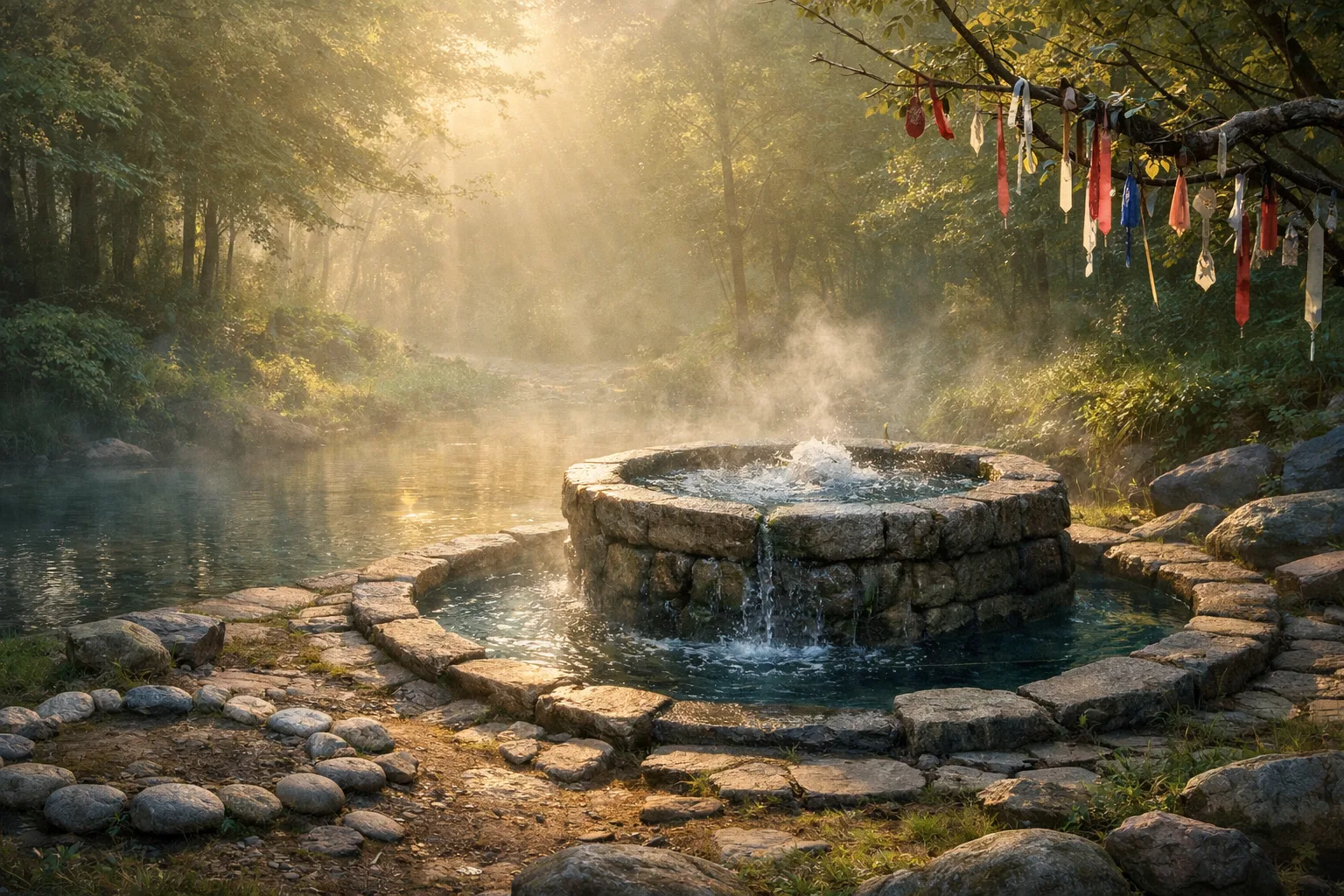
As Christianity spread, older springs did not simply vanish; many were baptized as holy wells. They became places to wash, drink, and pray on saint’s days. Royals, peasants, and pilgrims brought offerings, seeking cures from fevers and blindness. In urbanizing Europe, church leaders regulated such devotion, but the wells endured because they offered local access to the transcendent. Rituals—circling, dipping, tying cloth—made invisible hopes visible. The idea of Miraculous Springs Sacred Waters was, by then, a familiar cultural language.
Key Facts and Eyewitness Sources
What observers actually reported
Classical authors like Pausanias catalogued springs with unusual tastes, temperatures, or colors. Their descriptions balanced wonder with lists of offerings and customary rites. Later, monastic chronicles noted crowds at wells on feast days, where water and prayer blended. Travelers described lamps, ribbons, and crutches left behind by grateful patients. These records rarely read like laboratory notes; they are narrative mosaics. Yet they show consistent features: a claim of antiquity, a surprising property in the water, and a history of people who felt helped.
Patterns behind the testimonies
Eyewitness stories tend to cluster around three anchors. First, the spring has a distinctive trait—heat, minerals, or even timing. Second, the site carries an old story—hero, saint, or founding ancestor. Third, there is a living ritual—bathing, drinking, or sleeping nearby. When these strands weave together, cures feel plausible and communal. We can compare this dynamic to the medical customs surveyed in the history of bloodletting and medieval medicine, where trust and tradition shape outcomes as strongly as technique.
Where the myths stabilize
Myths stabilize when institutions adopt them. Priests, city councils, or guilds maintain the spring, organize feast days, and standardize stories. Tokens, inscriptions, and votive objects accumulate, reinforcing memory. Over time, Miraculous Springs Sacred Waters become mapped into calendars and laws. This institutional layer reduces dispute and invites more visitors, who add fresh testimony and relics. The cycle continues, and the reputation of the water deepens.
Analysis / Implications
Mind, body, and expectation
Expectation changes health. When trusted authorities and communities promise relief, the body often cooperates. The placebo effect measures this power in clinical terms. Ritual intensifies expectation through cost and repetition: fasting, travel, and waiting prime attention and hope. Warm mineral water can help joints, and rest improves sleep, but meaning multiplies those benefits. The phrase Miraculous Springs Sacred Waters names this fusion of biology and belief.
Why the stories spread
Healing tales spread because they solve problems. They explain why some recover and offer scripts for action to those still suffering. They also bind communities. Processions, shared meals, and votive offerings are public proofs of care. Myths adapt easily, absorbing older symbols into new calendars, as discussed in the cultural blending behind the “pagan origins” of Christmas. When water is scarce or volatile, stories also help manage risk, telling people when and how to approach powerful springs.
Case Studies and Key Examples
Asclepieia and Greco-Roman baths
At Greek sanctuaries of Asclepius, patients bathed, offered sacrifices, and slept in enkoimeteria, hoping for healing dreams. Inscriptions thanked the god for restored sight or mobility. Romans embraced this model and expanded it. Bath complexes layered engineering over geology, capturing heat and minerals. The blend of rest, heat therapy, and shared belief created a plausible path to relief. Miraculous Springs Sacred Waters, in this context, meant water plus ritual plus authoritative narrative.
Aquae Sulis (Bath) and syncretism
In Britain, Romans dedicated the hot springs at Aquae Sulis to Sulis Minerva, fusing local goddess and Roman deity. Curse tablets, jewelry, and coins suggest a busy traffic of hopes and grievances around the baths. Pilgrims bathed, consulted, and left tokens. The site’s reputation shows how imperial cultures adopt indigenous springs while preserving the promise of cure. The shrine told visitors how to behave and whom to thank when ailments eased.
Celtic wells and the medieval shrine
Across Ireland and Wales, wells linked to local saints hosted rounds, prayers, and cloth ties. Families returned yearly, knitting memory to place. Some cures were dramatic; most were modest improvements. The wells offered clean water, attention, and rest. They also offered stories that dignified suffering. Communities guarded these places through centuries of change, proving the social resilience of Miraculous Springs Sacred Waters.
Lourdes and modern scrutiny
Lourdes is a modern test case. Medical bureaus archive claims and investigate cures, and the number of officially recognized, medically inexplicable healings remains very small—fewer than one hundred. Yet millions still come for meaning, solidarity, and the possibility of help. The lesson is not that “nothing happens,” but that expectation, care, and ritual can work in modest, cumulative ways even when dramatic miracles are rare.
Historical Context (Extended)
Founders, kings, and water rites
Foundational myths rarely ignore water. Springs mark boundaries, sanctify contracts, and bless crops. In Roman tradition, early rulers shaped religion to align nature and law. Tales of Numa, augury, and sacred groves illustrate this impulse. Reading the legendary reigns in the seven kings of Rome shows how ritual calendars organized everyday life. Springs and wells fit that calendar as recurring appointments with the sacred.
Wonders and waters
Ancient “wonders” often featured water control—fountains, gardens, ports. Engineering that bent water’s path appeared magical to outsiders. Travelers carried those impressions home, smoothing technical details into marvels. Over time, stories congealed into myth. This is exactly how Miraculous Springs Sacred Waters gain authority: a striking natural fact meets skilled design and an eager audience, and the tale hardens into tradition.
Key Facts (Extended)
Geology’s quiet role
Many revered springs sit on fault lines or porous limestone, where groundwater heats, mineralizes, and rises. Iron tints water red; sulfur smells; heat eases muscles. These sensory cues advertise hidden processes. When communities link those cues to specific rituals—drinking three times, circling clockwise, sleeping on a certain night—the experience becomes reproducible and transmissible. Repetition stabilizes memory; memory stabilizes reputation.
Tokens, offerings, and “evidence”
Crutches hung on walls, coins in basins, and plaques of thanks were persuasive displays. They remain persuasive today. Each object is a data point with a face, even if it lacks controls. The accumulation matters. People judge in social ways, comparing the hope cost of a journey to the relief they feel afterwards. Such comparisons rarely follow statistical rules, but they are powerful and enduring.
Analysis (Extended)
Ritual cost and credibility
Anthropologists note that costly rituals signal sincerity. Pilgrimages demand money, time, and bodily effort. When participants pay those costs together, their trust in the promise rises. The water’s physical benefits—heat, minerals, cleanliness—are then interpreted through a trusted lens. Miraculous Springs Sacred Waters persist because the ritual makes belief feel earned.
Story structure and transmission
Effective healing legends follow memorable arcs: a desperate need, a risky journey, a precise act, a surprising result, and a public token. The arc is easy to retell. Communities reward good storytellers with status, and shrines reward good stories with attention. Over generations, minor variants survive if they fit local values and seasonal rhythms. The story becomes heritage.
Case Studies (Comparative)
Zamzam, Ganga, and onsen
Beyond Europe, sacred water traditions flourish. Zamzam in Mecca anchors pilgrimage with a well tied to ancestral rescue. In South Asia, ritual bathing in the Ganga binds ethics, purity, and community. In Japan, onsen and certain springs intertwine with Shinto ideas of cleanliness and renewal. Each case shows similar ingredients—distinctive water, storied past, and shared rite—assembled in culturally specific ways.
When water harms: a counterpoint
Water nurtures myths because it nurtures life. But it also destroys. Communities craft cautionary tales around shipwrecks and spills, reasserting moral order after chaos. For a modern example of how narratives form around water disasters, see the analysis of the Deepwater Horizon blowout. The moral is not that myths lie, but that water always gives us stories—of peril and of healing.
Conclusion
Miraculous Springs Sacred Waters endure because they answer multiple needs at once. Geology offers warmth and minerals; ritual offers structure; community offers recognition; and story offers meaning. The sum can soothe bodies and steady minds, even when spectacular cures are rare. If we read these places with empathy and curiosity, we see a human technology that blends nature with narrative.
For deeper context on mythic frameworks and civic memory, explore the ancient wonders survey. To see how foundation stories shaped civic rites around nature and time, read the Rome foundation myth analysis. Springs, wells, and baths sit at the crossroads of those traditions. They invite us to ask not only, “Does it cure?” but also, “What does it cure us to believe?”