4 Voyages of Columbus Explained: Routes, Ships, Legacy
4 Voyages of Columbus Explained: what truly happened on each crossing, from 1492 to 1504, and why it still matters. This guide pairs clear timelines with context, covering navigational choices, ships, encounters, and consequences. For background on the man behind the expeditions, see this complete biography of Christopher Columbus. If you want a focused narrative on the first crossing and landfall, explore the story of the first voyage and its immediate impact on Europe and the Caribbean.
Historical Context
The World on the Eve of 1492
European states sought direct sea routes to Asian markets. Overland trade had grown costly and unstable. Mariners refined latitude sailing, dead reckoning, and celestial fixes. Caravels offered range and flexibility. Monarchs leveraged exploration to bypass rivals and expand faith and influence.
The Atlantic was not an empty stage. Norse sailors had reached North America centuries earlier. For a concise overview of those crossings and tools, see this Vikings exploration timeline. Iberian pilots also mapped Atlantic islands, building experience with winds and currents.
Routes, Winds, and the “Atlantic Gyre”
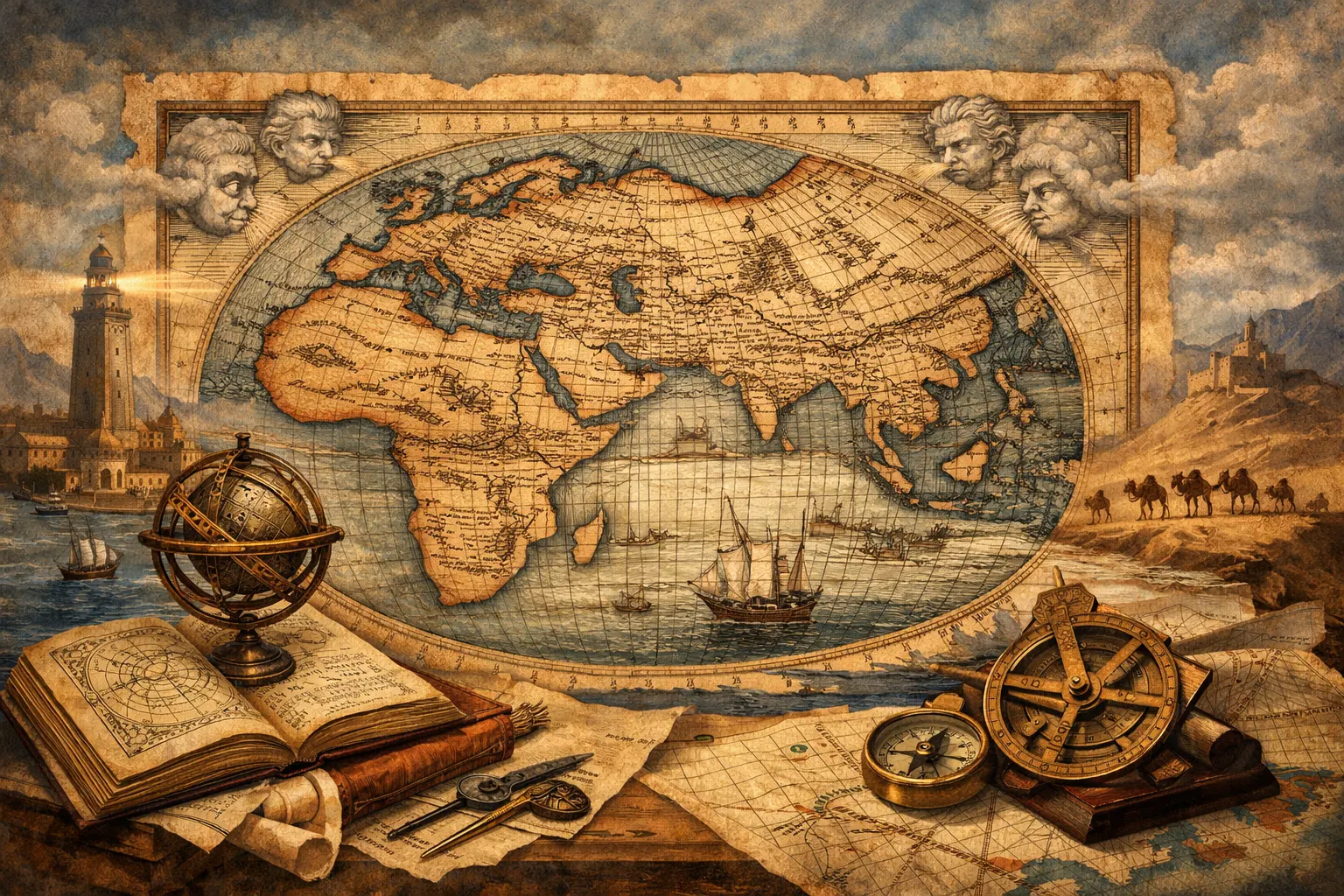
Columbus used the trade winds westward and the westerlies back to Europe. The loop forms a natural conveyor. Ships could reach the Caribbean by riding steady northeast trades after staging in the Canary Islands. The return arc bent north before curving east, exploiting mid-latitude winds.
Understanding this wind engine helps make sense of his choices across all four journeys. It also clarifies why departure points, seasons, and waypoints mattered more than raw compass headings.
Key Facts and Eyewitness Sources
First Voyage (1492–1493)
Fleet: Niña, Pinta, and Santa María. Departure: Palos de la Frontera, August 1492; stop in the Canaries. Landfall: an island in the Bahamas on October 12. He visited parts of today’s Cuba and Hispaniola. The Santa María wrecked near Hispaniola; a small outpost, La Navidad, was left behind. He returned in early 1493. For a structured, stage-by-stage recap, see 4 Voyages of Columbus Explained: as a guiding framework throughout this article.
Second Voyage (1493–1496)
Scale shifted dramatically: seventeen ships and over a thousand men. Columbus reached the Lesser Antilles, Puerto Rico, and Hispaniola. La Navidad was destroyed; La Isabela became the new base. The voyage introduced sustained colonization, enforced labor, and conflict. For details, compare the Second Voyage overview with contemporary letters and chronicles.
Third Voyage (1498–1500)
With six ships, Columbus sailed to the equatorial Atlantic, sighted Trinidad, and entered the Gulf of Paria. He observed huge freshwater outflow from the Orinoco, sensing a continental landmass. Later on Hispaniola, administrative tensions worsened. He was arrested and sent to Spain in chains. Eyewitness testimony and official letters reveal political fractures as much as navigational achievements.
Fourth Voyage (1502–1504)
Four ships probed Central America from Honduras to Panama, searching for a strait to Asia. Storms battered the fleet. A yearlong marooning in Jamaica tested leadership and improvisation. The expedition mapped long swaths of the coastline and affirmed prevailing currents, but failed to find the hoped-for passage.
Useful synthesis comes from neutral reference works as well, including Britannica’s biography of Columbus and the Library of Congress exhibit “Christopher Columbus: Man and Myth”, which compile sources and interpretations while noting contradictions.
Analysis / Implications
Navigation, Ships, and Risk
Columbus’s seamanship tapped the Atlantic wind system with striking consistency. Caravels balanced speed and draft for coastal work and open water. The larger nao carried supplies but struggled in shoals. Failures—groundings, worm damage, and storm losses—were common risks, not outliers. His route logic, though, held across all four voyages.
Administrative failures, however, undercut legitimacy. Reports from settlers, royal agents, and clerics exposed disorder and abuses. The crown separated navigation from governance. For how those tensions play out around 1498–1500, see this focused overview of the Third Voyage and its impact.
From Exploration to Empire
Exploration morphed into colonization quickly. The second voyage planted Europe’s first permanent towns in the Caribbean. Forced labor systems, resource extraction, and missionary projects followed. Demographic collapse among Indigenous peoples, driven by disease and violence, altered societies irreversibly.
Debate continues over intent versus outcome. 4 Voyages of Columbus Explained: is a lens to separate navigational ingenuity from colonial structures. Both belong in the story, yet they operate on different moral and historical planes.

Case Studies and Key Examples
Routes and Waypoints
First Voyage: Canaries staging; westward trades; Bahamas landfall; coastal recon in Cuba and Hispaniola; northing return to catch westerlies. Second: Lesser Antilles arc then Hispaniola; supply convoys and patrols; inland expeditions from coastal bases. Third: Equatorial sweep to Trinidad; Gulf of Paria; recognition of a vast river system. Fourth: Honduras to Panama; trials near the Darién; Jamaica marooning and eventual rescue.
For a clean, voyage-by-voyage summary of the final expedition’s setbacks, use this Fourth Voyage guide, which keeps track of storms, ports, and damaged hulls.
Ships and Capabilities
Caravels like Niña and Pinta offered speed and maneuverability. Lateen and square rigs could be mixed for different wind angles. The Santa María, a nao, carried more cargo but drew deeper water, limiting coastal flexibility. Hull maintenance, spare cordage, and food stores decided range as much as sails did.
On later voyages, more vessels increased redundancy but magnified supply demands. Command required reliable pilots, caulkers, carpenters, and surgeons. Crew morale hinged on rationing, discipline, and credible landfall estimates. 4 Voyages of Columbus Explained: highlights how logistics shaped every tactical decision.
Encounters and Administration
First contacts involved trade, gift exchange, and taking interpreters. As settlements formed, demands for labor and tribute escalated. Resistance, reprisals, and rivalries among Europeans intensified. Conflicting orders from Spain met local realities. The result was administrative strain and cycles of crisis.
Contemporary chroniclers, including Columbus’s own letters and later compilations, offer coverage. Always compare different voices. 4 Voyages of Columbus Explained: is also a reminder to weigh claims against material evidence, like archaeology and climatology.
Numbers to Keep in View
Dates: 1492–1493, 1493–1496, 1498–1500, 1502–1504. Typical speeds: 3–5 knots under trade winds. Crew size on the first voyage: roughly ninety. Second voyage fleet: seventeen ships, 1,200+ people. Mortality rates, ship losses, and settlement failures remained high. Hurricanes and shipworms complicated wooden hull survival in tropical waters.
For period context on intellectual currents shaping Europe’s outlook, you can later contrast this story with broad cultural shifts explored in a Renaissance myths analysis—useful when mapping ideas to policies.
Conclusion
Columbus’s crossings opened a durable oceanic corridor, not a one-off experiment. The routes, ships, and seamanship were real achievements. So were the consequences: conquest, coerced labor, and demographic catastrophe. Keeping both in view prevents simple narratives.
When you line up the four timelines—4 Voyages of Columbus Explained: as a single thread—you see a shift from daring navigation to imperial infrastructure. That shift is the true legacy. To balance the picture with deeper Indigenous context, consider this study of how the Maya civilization changed history. For thinking about how eras reshape beliefs that guide policy, read the Renaissance turning point myths and compare rhetoric to results.
If you want a compact takeaway, remember two pairs: trades going west, westerlies coming home; caravels for scouting, naos for hauling. The rest is judgment, weather, and power—and the human costs recorded by witnesses and later critics.