Christopher Columbus Third Voyage: Routes, Discoveries, and a Fall from Power
Christopher Columbus Third Voyage unfolded between 1498 and 1500, when the admiral aimed south to test new waters and rescue a troubled colony. This chapter links discovery with governance, from the heat near the equator to unrest in Hispaniola. For a wider portrait of the man behind the expeditions, see the complete Columbus biography. To trace how earlier success set the stage for later strain, revisit the story of the First Voyage.
Historical Context of Christopher Columbus Third Voyage
Spain’s Atlantic project was maturing fast by the late 1490s. Columbus had crossed the ocean twice, and the crown now expected practical returns. Settlements needed food, order, and gold. Rival expeditions pressed claims on coasts and islands. In this climate, the admiral argued for a southern route, hoping to find richer lands and steadier winds.
The Second Voyage had already shifted the mission from exploration to colonization, with all the pressures that followed. That pivot is essential to understand the tensions that would surface during the Christopher Columbus Third Voyage. For a detailed look at that turning point, see the Second Voyage overview. For the broader intellectual mood—why Europeans believed knowledge and maps could reorder the world—consider how historians challenge easy narratives in myths of the Renaissance “turning point”.
Key Facts and Eyewitness Sources of Christopher Columbus Third Voyage
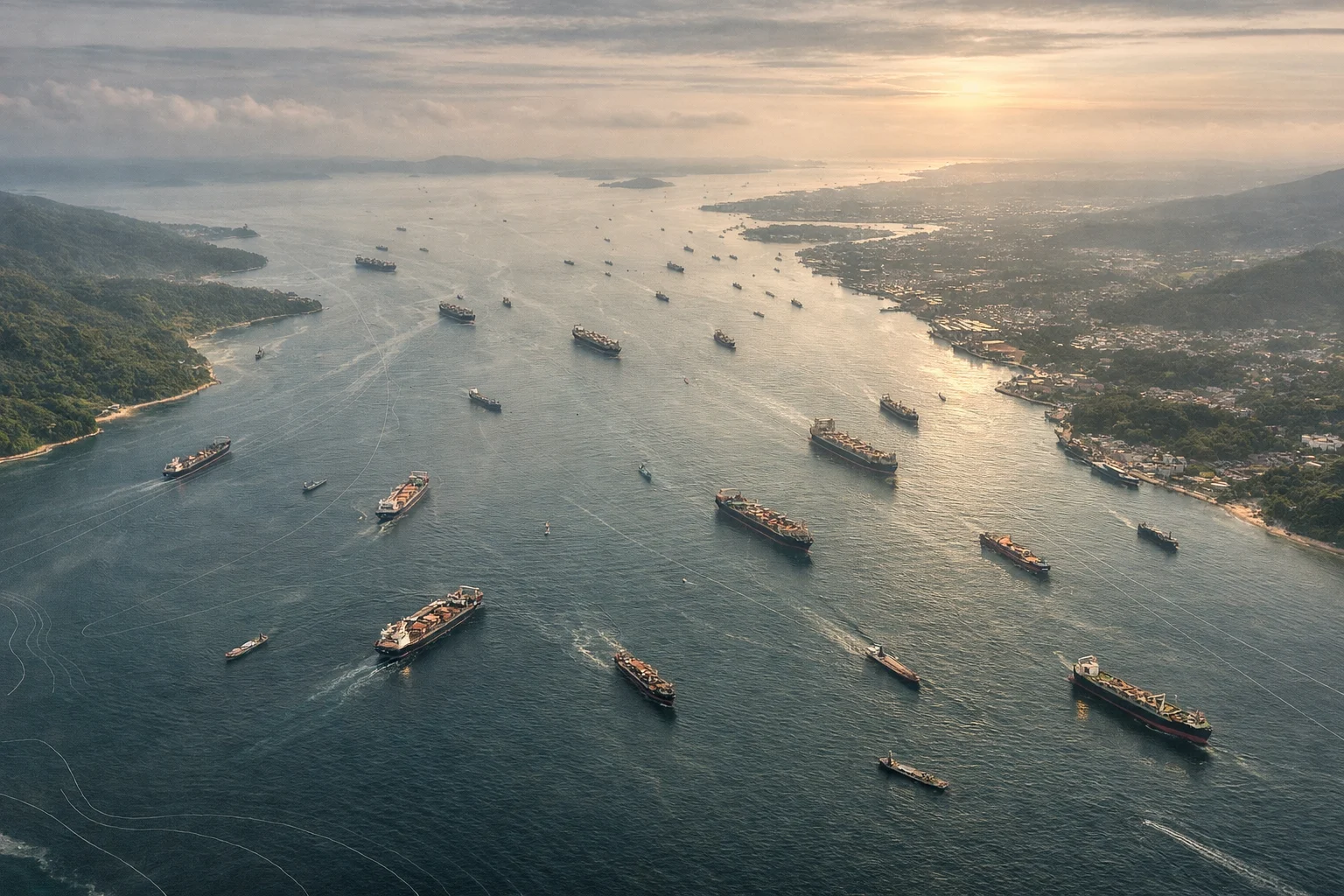
Columbus departed from Spain on May 30, 1498, with six ships. Three were loaded for Hispaniola; three were assigned to explore. He steered through the Canaries and Cape Verde, then endured calms and fierce heat before bearing west-southwest. On July 31 he sighted Trinidad. Between early and mid-August he entered the Gulf of Paria, testing passages he named the Dragon’s Mouth and Serpent’s Mouth. The huge freshwater outflow from the Orinoco convinced him he was near a continental landmass, which he called “Tierra de Gracia.” He then moved along the Paria coast and toward Margarita and Cubagua, where pearls hinted at wealth.
By late August he reached Hispaniola, ill and exhausted, to find the colony divided. Revolts, shortages, and disputes over labor and justice strained his authority. In 1500, royal envoy Francisco de Bobadilla arrived, arrested Columbus and his brothers, and sent them to Spain in chains. For a concise, modern summary of these events, see Encyclopaedia Britannica’s entry on the second and third voyages. For period narratives, the American Journeys background on the Third Voyage account outlines sources behind the Paria passages. To follow the story’s endgame into 1502–1504, compare patterns of hardship during the Fourth Voyage and the changing map logic explored in our Magellan biography.
Analysis / Implications of Christopher Columbus Third Voyage
What changed in 1498 was not only geography but scope. The encounter with the South American mainland enlarged Europe’s mental map. It also exposed a management crisis. Colonization demanded logistics, law, and compromise. Columbus excelled at ocean passages, but governing settlers with conflicting interests proved harder. The pearls of Cubagua and Margarita teased investors with quick gains, yet profits required stable institutions.
The Third Voyage also sharpened contradictions. Columbus described a lush “graceful” land near the Orinoco while Hispaniola’s fields starved. He pictured river systems worthy of a continent while colonists demanded wages, rights, and restitution. Royal investigators saw the mismatch and intervened. In this sense, Christopher Columbus Third Voyage marks a hinge where discovery and administration collided. Decisions taken in its aftermath—new governors, stricter oversight—shaped how Spain would run the Caribbean for a generation.

Case Studies and Key Examples
1) Trinidad and the Gulf of Paria: A New Coastline Emerges
On arriving at Trinidad, Columbus navigated a complex estuarine world. The Atlantic pushed in through narrow straits; the Orinoco swept out with force. The admiral tested the “Boca del Dragón” and “Boca de la Sierpe,” threading channels to view the enclosed Gulf of Paria. The brackish water and strong currents were clues to a great river system. He reasoned, correctly, that such a flow implied a continent, not an island. This was a conceptual leap as much as a geographic one. It redirected attention from Caribbean archipelagos to a continental rim. As a result, Christopher Columbus Third Voyage seeded reconnaissance that later expeditions would deepen along the Venezuelan and Guianan coasts.
2) Margarita and Cubagua: Pearls, Profits, and Early Extractive Economies
Columbus’s men heard of pearls and soon saw them at Margarita and nearby Cubagua. The find mattered beyond ornament. Pearls became one of the earliest export commodities from the region. Their extraction created labor demands, new trade circuits, and brutal incentives. In miniature, these fisheries previewed the wider colonial economy: valuable goods concentrated in a few sites, dependence on coerced labor, and rapid ecological stress. Even before sustained mainland conquest, the Caribbean was already tied to markets across Seville and beyond. The practical outcome of the Christopher Columbus Third Voyage was thus not just a line on a map, but another thread in an expanding Atlantic economy.
3) Hispaniola in Crisis: Rebellions, Shortages, and the Limits of Rule
By 1498, Hispaniola’s settlement staggered under disease, crop failures, and factional feuds. Veteran colonists demanded pay and land; new arrivals expected opportunity, not hunger. Indigenous communities faced violence, forced labor, and dislocation. Columbus confronted revolts while managing his own health. Compromise deals empowered rivals and eroded trust. The crown read alarming reports and dispatched Bobadilla with broad powers. His arrest of the Columbus brothers in 1500 was a political shock. Yet it underscored a reality: imperial projects could not rest on one admiral’s discretion. In governance, Christopher Columbus Third Voyage ended with a transfer of authority that foreshadowed more bureaucratic rule.
4) Cartography and Ideas: From Islands to Continents
Maps and reports from 1498–1500 began to show a coast that did not fit Asia. The river-swept Paria and the arc of Trinidad suggested a landmass of scale. While Columbus maintained theories about Earthly Paradise and Asia’s fringes, practical pilots charted capes, currents, and anchorages. Mariners learned the seasonal winds, the hazards of the Dragon’s Mouth, and the prospects of pearl grounds. Over time, these working notes fed more accurate charts. The intellectual outcome of the Christopher Columbus Third Voyage was clarity: the Atlantic west did not quickly yield Cipangu. It required a new framework that later navigators and mapmakers would refine.
Conclusion about Christopher Columbus Third Voyage
The Third Voyage is a story of promise and strain. It expanded Europe’s horizon to a continental shore while exposing cracks in colonial administration. It offered pearls and rivers, yet returned chains and inquiries. In human terms, it brought Spanish settlers and Indigenous peoples into sharper conflict, accelerating change that would reshape the Caribbean. In strategic terms, it forced the crown to separate the skills of navigation from the skills of governance.
If you want to place this expedition within a broader arc of ocean daring, see our Vikings exploration timeline. For a Mediterranean-to-Atlantic perspective on how seafaring knowledge evolved long before Columbus, explore our take on Phoenicians and the sea. Together, these notes frame why the Christopher Columbus Third Voyage still matters: it widened the map and narrowed an admiral’s power, a dual legacy that would define the next century of Atlantic history.