How Suez Canal global shipping rewired Europe-Asia trade
Suez Canal global shipping transformed how goods move between Europe and Asia. In a single waterway, steam power met geography and rewrote old caravan maps. The canal did not replace overland exchange. It reorganized it around faster sea lanes and new ports. To grasp that shift, we must see how maritime shortcuts interact with history. From the Silk Road trade network to Egypt’s knowledge hubs like the Library of Alexandria, routes evolve when costs, time, and risk change together.
Historical Context
From caravans and capes to a shortcut
For centuries, Europe–Asia exchange relied on caravans, coastal cabotage, and the long haul around Africa. Rounding the Cape of Good Hope added weeks and thousands of nautical miles. The 1869 opening of the Suez Canal turned that map on its side. Steamships gained a direct thread from the Mediterranean to the Red Sea. Suez Canal global shipping cut time, reduced insurance exposure, and allowed more predictable schedules. Port Said and Suez became hinges between continents, while Trieste, Marseille, and Genoa grew as receiving nodes.
Empire, nationalization, and control
Control of sea chokepoints has always shaped trade. When the Ottomans took Constantinople, Europe’s networks bent toward the Atlantic, a shift explored in our note on the Fall of Constantinople. The Suez era pulled the center back toward the Mediterranean. European empires financed and protected the route, seeking steady access to Asian markets. After nationalization in 1956, policy choices in Cairo mattered as much as ship design in Glasgow. The canal reframed exploration legacies too: compare early Atlantic voyages in our piece on Columbus’s first crossing with industrial-era scheduling after Suez.
Key Facts and Eyewitness Sources
A narrow path with outsized weight
Modern shipping carries most traded goods. Industry sources estimate that about 90% of world trade moves by sea, underscoring why a single passage can matter so much (International Chamber of Shipping overview). The canal’s importance is not abstract. When a 2021 grounding halted traffic, freight rates spiked and delivery windows shifted globally. The lesson was clear: Suez Canal global shipping links schedules, inventories, and port congestion across continents.
Chokepoints connect and concentrate risk
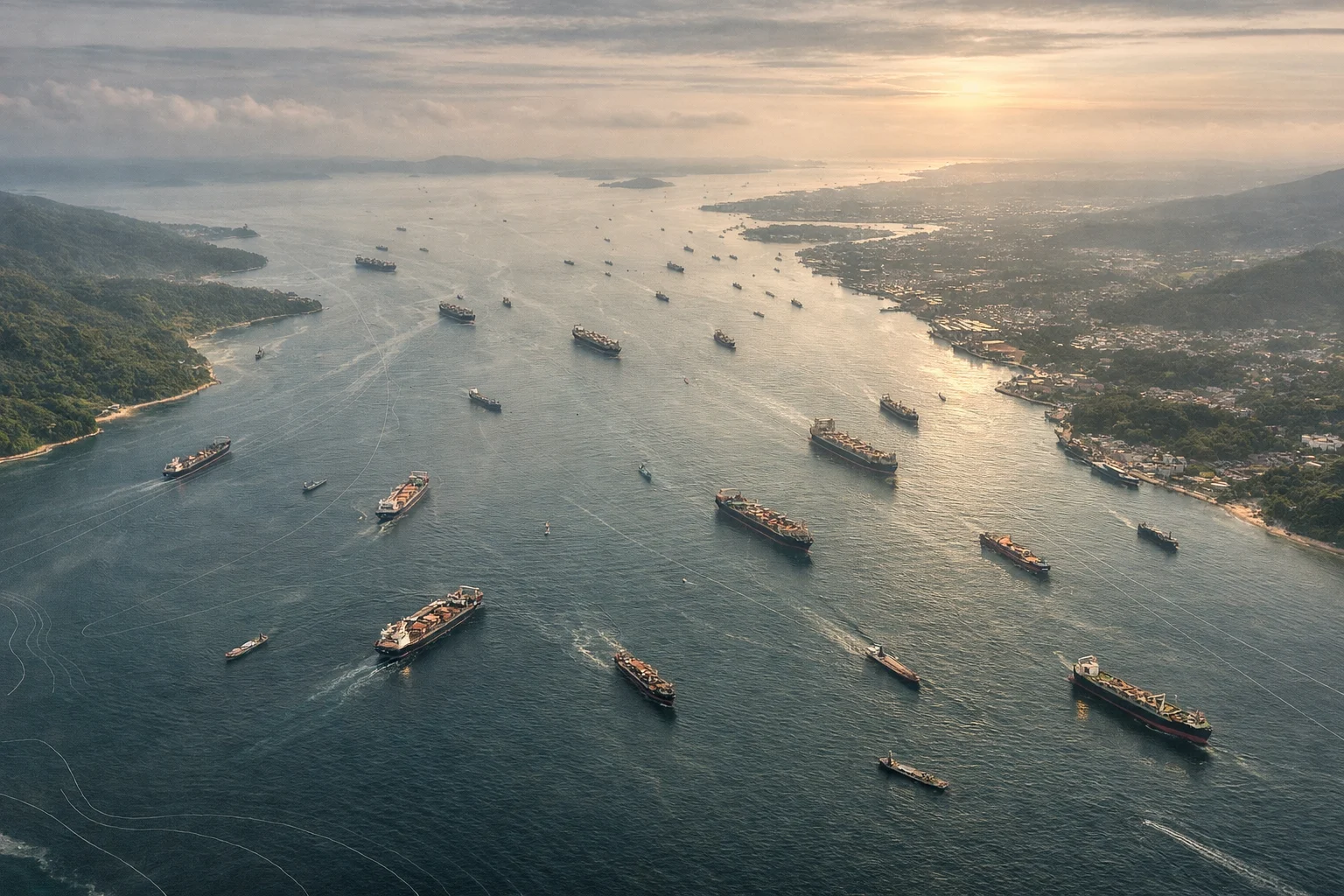
Chokepoints compress distance but also concentrate exposure. Near Suez, the Bab el-Mandeb sits between shipping lanes and regional tensions. To the east, the Strait of Hormuz funnels energy flows; to the north, Mediterranean ports rely on steady passages. Rerouting around the Cape adds time and fuel. For lines with tight rotations, that means missed berthing windows and port yard pileups. Suez Canal global shipping is therefore a balance: speed and predictability when open; cascading delays when stressed.
Analysis / Implications
Cost, time, and network effects
Why did Suez change so much? Distance savings compound across fleets. A typical Asia–Northern Europe loop can save over a week compared with the Cape route, depending on speed and weather. That gap shapes vessel deployment, bunker planning, and contract terms. Shippers build inventory models around those cycle times. When the route holds, factories lean out their stocks. When it falters, buffers return and working capital ties up.
Geopolitics and infrastructure strategy
Suez Canal global shipping also changed politics. Ports and refineries clustered to capture the shortcut’s flow. Governments invested in dredging, pilots, and rail links that complement canal transits. UN trade analysis frames canals as critical nodes that reduce time and cost yet increase systemic vulnerability to shocks (UNCTAD’s 2024 overview). The implication is practical: resilience is not only escorts and insurance. It is also dual-sourcing, flexible routing, and better berth management at both ends of the Mediterranean–Red Sea chain.
Case Studies and Key Examples
Route math: Suez versus the Cape
Consider a standard Asia–Europe container service. Sailing via Suez can trim thousands of nautical miles versus the Cape of Good Hope, often translating to one to two weeks saved on a round trip. That gap compounds across a string of ships. One delayed arrival can ripple through terminal slot allocations and push yard dwell times higher. Suez Canal global shipping enables planners to lock predictable arrivals, which reduces demurrage risk and supports just-in-time manufacturing in Europe.
Chokepoint echoes: From the Red Sea to the Western Pacific
Canal logic also applies elsewhere. The Taiwan Strait is a different geography but a similar principle: narrow waters concentrate global exposure. Our primer on why the Taiwan Strait crisis still shapes policy shows how a few nautical miles can sway supply lines. Suez Canal global shipping taught operators to simulate detours and to pre-position spare containers. The same playbook helps when typhoons, port strikes, or security alerts force adjustments across Asia and Europe.
Key Facts and Eyewitness Sources
What ships, cargoes, and ports changed
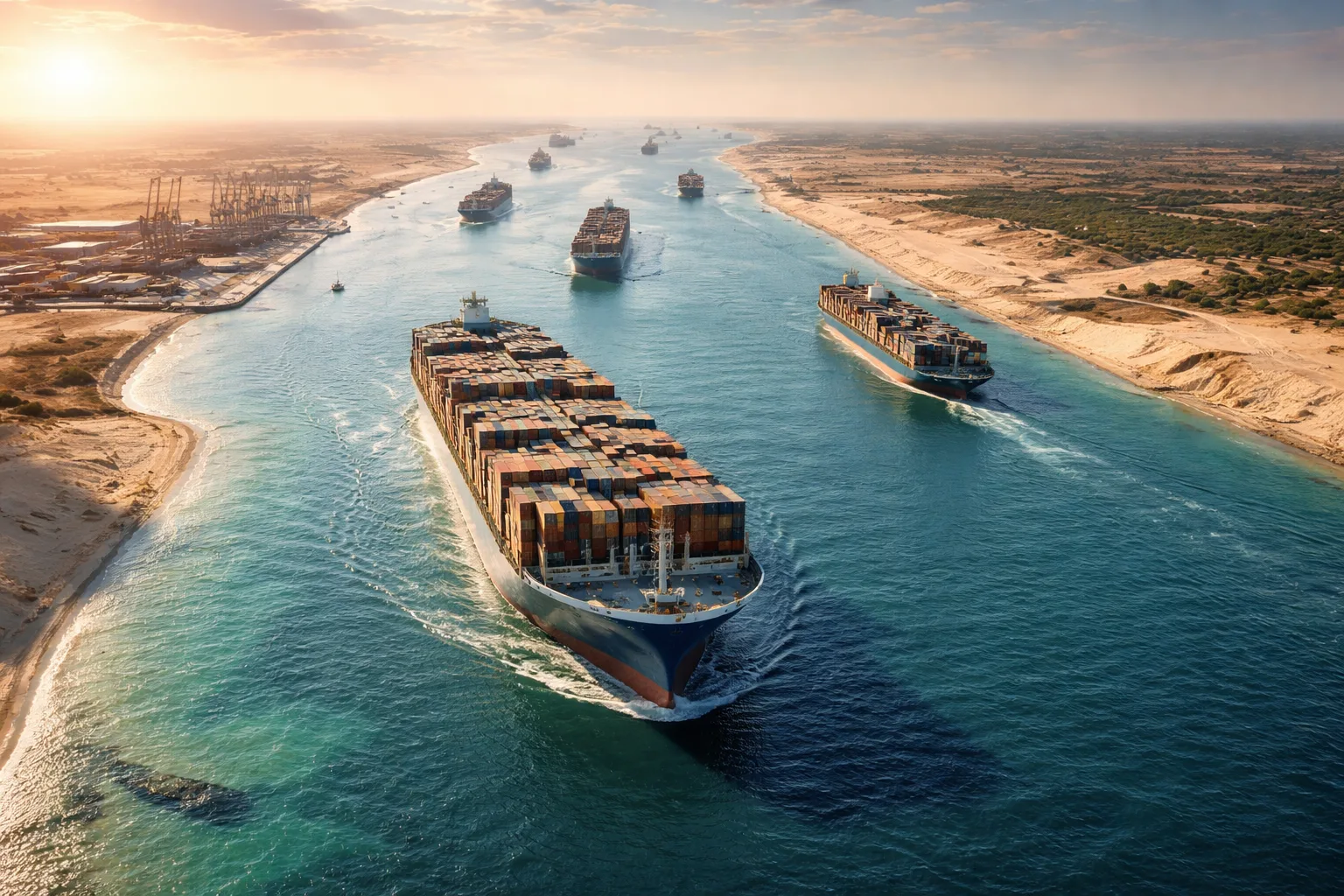
The canal favored larger, faster ships with reliable draft. Tankers and container vessels benefited most as the waterway deepened over time. European ports expanded rail connections inland. Exporters in East Asia synchronized factory gates with sailing windows through the Mediterranean. Suez Canal global shipping thus moved value chains from “point to point” thinking toward synchronized, multi-port loops. The effect was cumulative: lower average transit time, tighter delivery variance, and a shift from warehouses to data-driven planning.
Operators’ perspective: schedules and buffers
Eyewitness accounts from operators often mention the same theme: rotation integrity. Missing a single Suez transit slot can knock a vessel off its weekly schedule, forcing speed-ups that burn fuel and disrupt other port calls. That is why lines model contingencies hours by hour. When uncertainty rises, buffers grow. When routes stabilize, carriers shrink slack and pass savings along the chain.
Analysis / Implications
Winners, losers, and the carbon ledger
Shorter routes cut fuel burn and emissions per transit. Longer detours do the opposite. That calculus affects European retailers, Asian manufacturers, and Mediterranean ports. Rail corridors and air freight can backfill high-value gaps, but only for limited volumes. Insurance and war-risk premia swing with headline risk. Suez Canal global shipping therefore remains central to decarbonization pathways, schedule reliability, and freight rate cycles.
Policy levers and private decisions
Public actors can reduce volatility with clear canal fees, transparent scheduling, and cooperative security in adjacent waters. Private actors can diversify routings and maintain surge capacity in terminals. UN trade work highlights how chokepoint resilience complements infrastructure upgrades, not replaces them (UNCTAD analysis). The canal’s story is thus a design problem: align incentives so that speed never sacrifices robustness.
Case Studies and Key Examples
Industrial Europe, factory Asia
Automotive clusters in Germany and northern Italy depend on predictable lead times from East Asia. A ten-day detour can force production changes or temporary shutdowns. Meanwhile, Asian exporters plan launches around sailing schedules. Suez Canal global shipping supports both ends by anchoring a shared clock. When it slips, spot rates spike and blank sailings multiply. The lesson is simple: resilience planning pays for itself when the map changes overnight.
Energy and food corridors
The canal also shapes energy and food flows. Tankers and bulk carriers move crude, refined products, and grains along this spine. Disruptions ripple into fuel prices and food security debates. To see how narrow waters create leverage, revisit the Strait of Hormuz analysis. The same logic applies in the Red Sea, where even temporary risk alerts can reprice global voyages and reorder port priorities.
Conclusion
The canal did more than shorten a route. It rewired planning, pricing, and politics from Shanghai to Rotterdam. The practical takeaway is twofold. First, keep Suez Canal global shipping central to network design, but treat it as one of several viable paths. Second, build buffers that scale up during shocks and shrink when calm returns. For deeper Egyptian context, explore our notes on Tutankhamun’s world and Egypt’s long tradition of engineering in pyramids construction. History shows routes change. Smart systems change with them.