Why Saffron spice labor history makes it the priciest herb
Saffron spice labor history is the hidden engine behind the world’s priciest herb. From Bronze Age gardens to modern markets, saffron owes its value to human hands, not to rarity alone. Its story travels across empires and caravan routes, shaped by harvest windows, guild rules, and domestic work. Early exchanges along the Silk Road trade network spread crocus bulbs and techniques. Power structures like the Achaemenid Persian Empire organized agrarian labor that helped staple crops and specialty spices coexist. Understanding this lineage clarifies why today’s saffron still costs so much: every thread is a record of labor, time, and risk.
Historical Context
Saffron likely emerged from domesticated Crocus sativus in the eastern Mediterranean and Iranian plateau. Farmers selected bulbs for richer color and stronger aroma, but also for a trait with consequences: sterility. The plant cannot seed itself. It reproduces by corms, which growers divide and replant by hand. That single biological constraint tied saffron’s fate to continuous, careful labor.
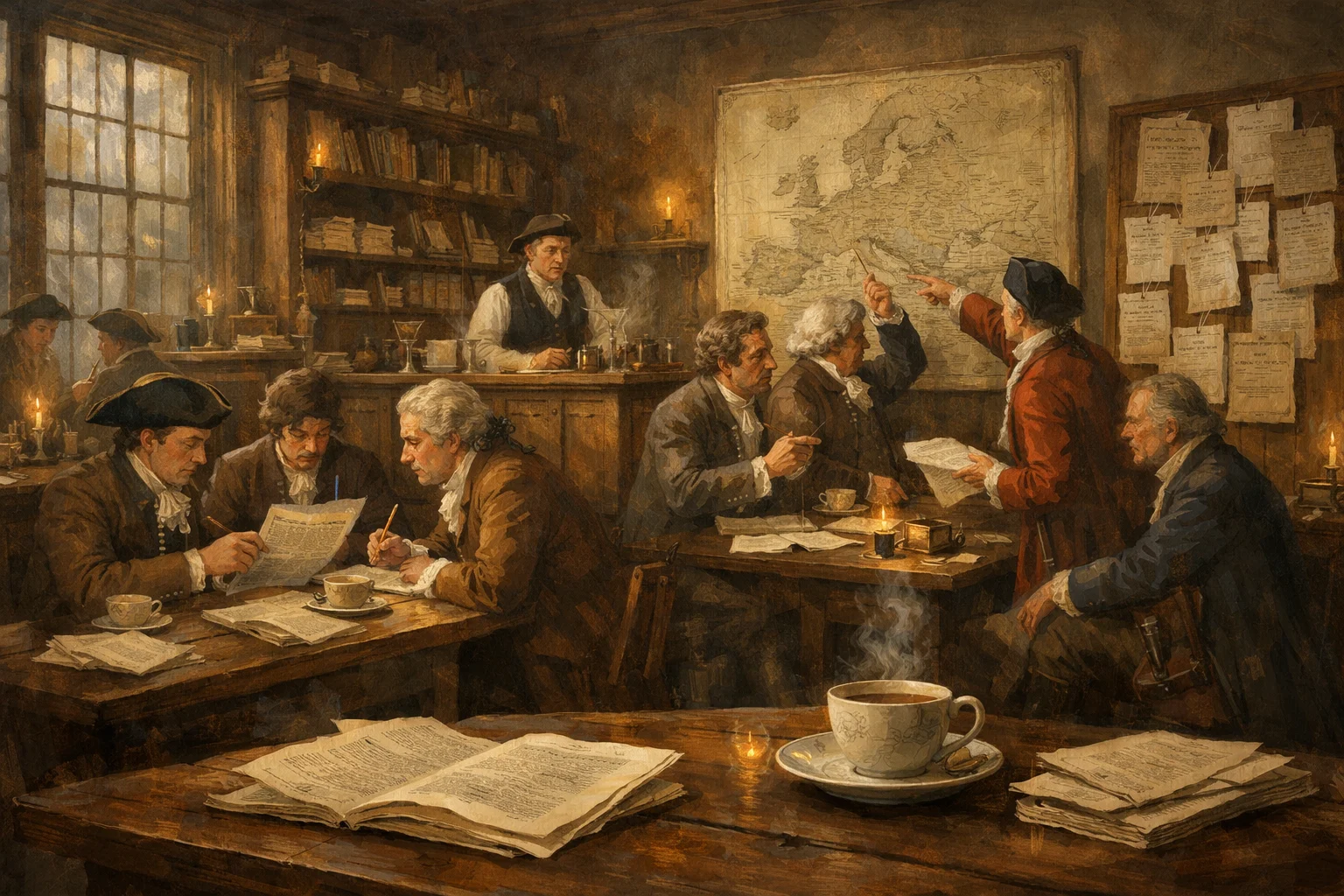
Merchants and migrants carried the spice west into Greece, Sicily, and Iberia, and east into Kashmir and Central Asia. Maritime traders built demand in port cities, while caravan hubs fixed prices and standards. Pre-modern guilds often set quality rules, and courts punished adulteration. Coastal exchange cultures, like those reassessed in studies of Phoenician trade, remind us that saffron’s diffusion was never only culinary. It was institutional, logistical, and deeply social.
Key Facts and Eyewitness Sources
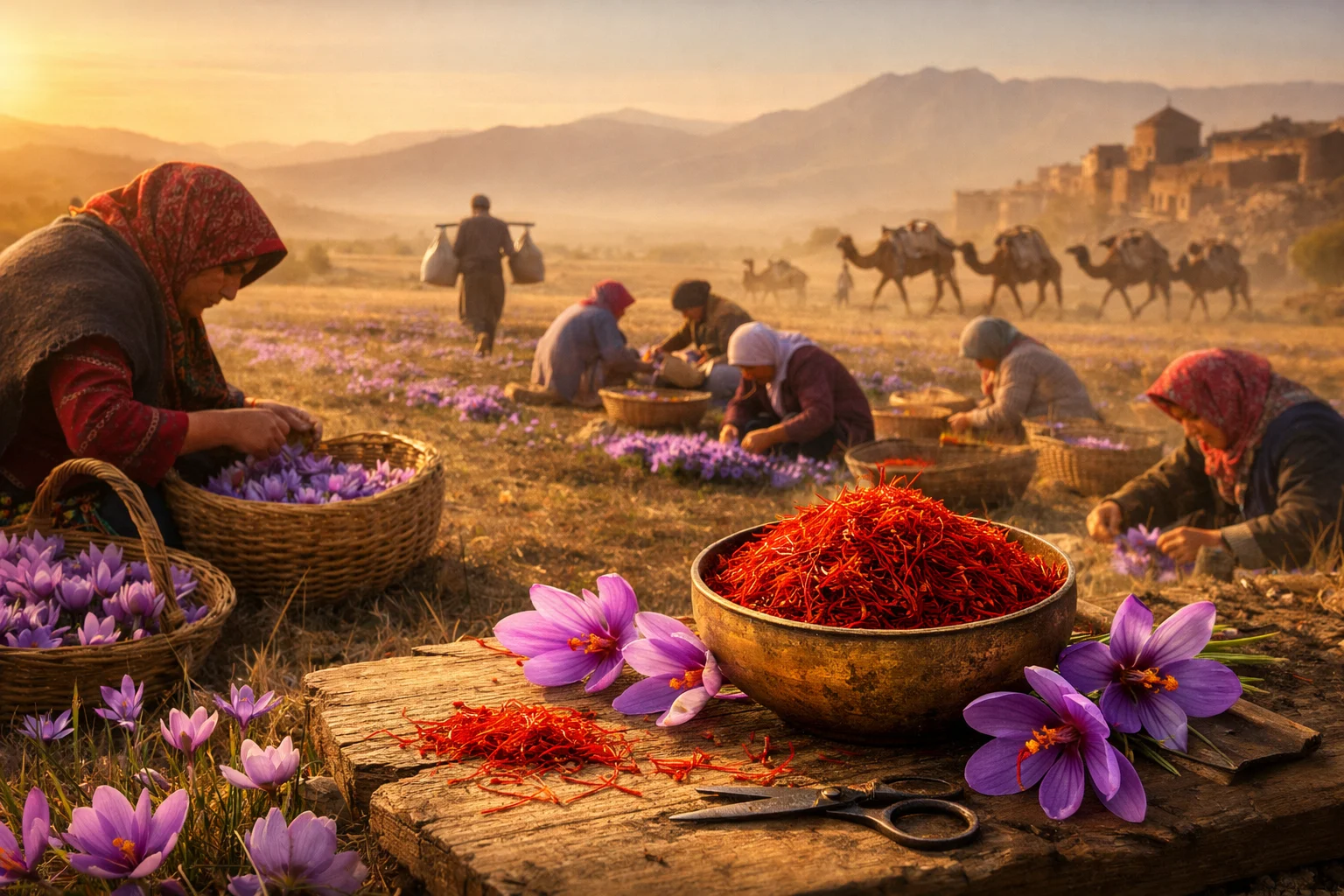
Every saffron flower bears three crimson stigmas. Harvesters pick blossoms at dawn, when petals close around the threads. Workers then pluck the stigmas and dry them the same day. The yield is microscopic. Depending on variety and moisture, a kilogram of dried saffron can require roughly 120,000 to 170,000 flowers. Records from growers in Iran, Spain, Greece, and Italy repeatedly cite similar ratios.
Eyewitness accounts from farm cooperatives describe lines of family members, often women, seated over baskets, separating stigmas for hours. In villages from Khorasan to Abruzzo, the rhythm repeats for a brief harvest window each autumn. Travel narratives also noted the spectacle. Itineraries that followed Eurasian routes—like those retraced in research on Marco Polo’s overland world—described precious dyes and spices changing hands in markets where labor defined value more than land.
Analysis / Implications
Why labor intensity sets the price
Saffron’s high price stems from work, timing, and fragility. Fields bloom for days, not months. Harvests occur before sunlight degrades the compounds that give saffron its color and aroma. Almost no step can be mechanized without quality loss. The plant’s sterility keeps replanting manual. These mechanics make wages a large share of cost and limit scale.
Market concentration compounds this effect. Today, one country dominates production, while a handful of regions supply the rest. Such concentration magnifies the impact of droughts, policy changes, or currency swings on global prices. Explanations of saffron’s expense increasingly stress harvesting constraints and perishability, as outlined in Britannica’s overview of saffron’s cost drivers. Historic shocks also matter: population losses or labor disruptions change supply. Analyses of pandemics, like those explored in work on the Black Death’s economic aftermath, show how labor scarcity can echo through markets.
Case Studies and Key Examples
Khorasan, Iran: skill, women’s work, and seasonal speed
In northeastern Iran, farms organize pickers at first light. Blossoms must be gathered before they open. Sorting circles form in homes and sheds, where nimble fingers strip the three threads and discard the yellow styles. Estimates from agricultural briefs and development notes describe hundreds of thousands of stigmas per kilogram and highlight how this handwork sustains local employment, particularly for women. Overviews of the sector, including FAO country notes, underline that manual steps define both cost and quality; see this practical framing in FAO’s saffron discussion.
La Mancha and Abruzzo: European quality norms
Spanish La Mancha and Italy’s Abruzzo preserve drying traditions that stabilize aroma and color. Flowers are toasted gently, sometimes over embers, to lock in crocin and safranal. These regions use protected designations and strict sorting to prevent adulteration. The goal is the same as in Iran: concentrate value in the thread, not in volume. Because labor drives price, maintaining reputation reduces the incentive to cut saffron with dyed fibers.
Afghanistan and Greece: diversification and risk
Afghanistan’s saffron has expanded as an alternative cash crop. Greek producers in Kozani balance heritage and export markets. Both confront logistics costs and climate variability. Skilled labor availability limits acreage. A scarcity premium emerges when bloom timing collides with storms or frost. That premium is a labor premium, writ large.
Labor rights and the hidden cost of cheapness
Specialty crops often depend on precarious work. When labor is undervalued, entire supply chains absorb risk and reputational damage. Catastrophes in other sectors, such as the Rana Plaza factory collapse analysis, remind us that price pressures can externalize human costs. Saffron producers that invest in safe workplaces and fair pay protect both product quality and regional identity.
How Saffron Spice Labor History Shaped Markets
Guild rules, fraud, and consumer trust
Medieval ordinances fined merchants for stretching saffron with calendula, turmeric, or dyed corn silk. Similar concerns persist today. Testing standards, batch traceability, and grading systems exist because the core material is tiny and valuable. When each thread represents a sliver of handwork, cheating steals labor as much as revenue. Cultural memory of such fraud still shapes shoppers’ trust and the premium for certified origins.
Caravans, ships, and pricing power
Routes determined who captured value. Caravans crossing Central Asia linked oases and customs posts, described in reconstructions of the Silk Road’s institutional web. Maritime republics negotiated dues and escorts, as seen in Mediterranean trade histories. Knowledge of winds, taxes, and safe harbors translated into pricing power over labor-intensive goods like saffron.
Women’s labor as competitive advantage
Speed and dexterity matter. In many producing regions, women’s seasonal work makes the difference between top-grade threads and downgraded lots. Sociologists note that this division of labor, while empowering income locally, can also conceal unpaid hours. Recognizing that hidden contribution is essential to explaining why saffron’s finest grades fetch their prices, and why mechanization has never fully replaced skilled hands.
The Economics of a Thread
Why machinery struggles
Machines excel at repetitive cuts, but saffron requires selective precision: three fragile stigmas per blossom, quickly separated from petals and styles. Bruising reduces color release. Delay reduces aroma. Mechanical prototypes often damage threads or leave too many defects, erasing the premium. The bottleneck stays human.
Yield math and margin reality
Consider the arithmetic. If 400,000 or more stigmas compose a kilogram and each flower offers three, fields must produce extraordinary blossom counts. Brief harvest windows concentrate labor costs into a few days. That compresses wages into a narrow time frame and makes bad weather catastrophic. Producers charge prices that reflect that compression.
Global shocks and local fields
Political or climatic shocks travel quickly through concentrated markets. Droughts, sanctions, or currency crises can change farmgate pay and export rates within weeks. Reporting on cost drivers often points back to handwork, perishability, and risk, consistent with Britannica’s synthesis on saffron pricing. In short, saffron spice labor history continues to set the floor beneath modern prices.
Labor, Culture, and Identity
Rituals of harvest
Community harvests are social events. School breaks align with bloom peaks. Kitchens fill with trays and sieves. Multigenerational knowledge passes in the posture of hands, not in manuals. This choreography keeps standards alive and codifies quality rules beyond writing.
Value beyond the kitchen
Saffron colored textiles and illuminated manuscripts. It flavored court dishes and street foods. That cultural breadth helps explain why growers defend place names and methods. In many regions, a thread’s worth is a badge of identity. The same logic guided luxury trades from antiquity to early modern Europe, linking specialized labor to civic pride and law.
Scholars of travel and empire reconstruct how narratives carried prestige. Explorers’ routes, revisited in biographies of Venetian travelers, showcase how stories amplified demand. A premium grows when buyers can picture the sunrise harvest and the hands that make it happen. This is the living core of saffron spice labor history.
Conclusion
Saffron’s price is not a mystery; it is a ledger of human effort. A sterile plant obliges manual replanting. A short bloom window demands speed. Three threads per flower make waste costly. Markets concentrated in a few regions magnify risk. Across centuries, institutions, routes, and rituals protected quality while honoring the hands behind each gram.
Modern supply still sways with geopolitics. Iran’s recent past—summarized in analyses of the Iranian Revolution of 1979 and the 1953 coup legacy—shows how policy, currency, and sanctions ripple through farm incomes and export prices. The lesson holds from caravans to air freight: labor, not land, remains saffron’s scarce resource. Recognizing this, consumers and retailers can choose traceable lots, reward safe workplaces, and keep the value where it is created—between field at sunrise and family table at dusk. That is the enduring truth of saffron spice labor history.