Why Strait of Malacca chokepoint matters for U.S. prices
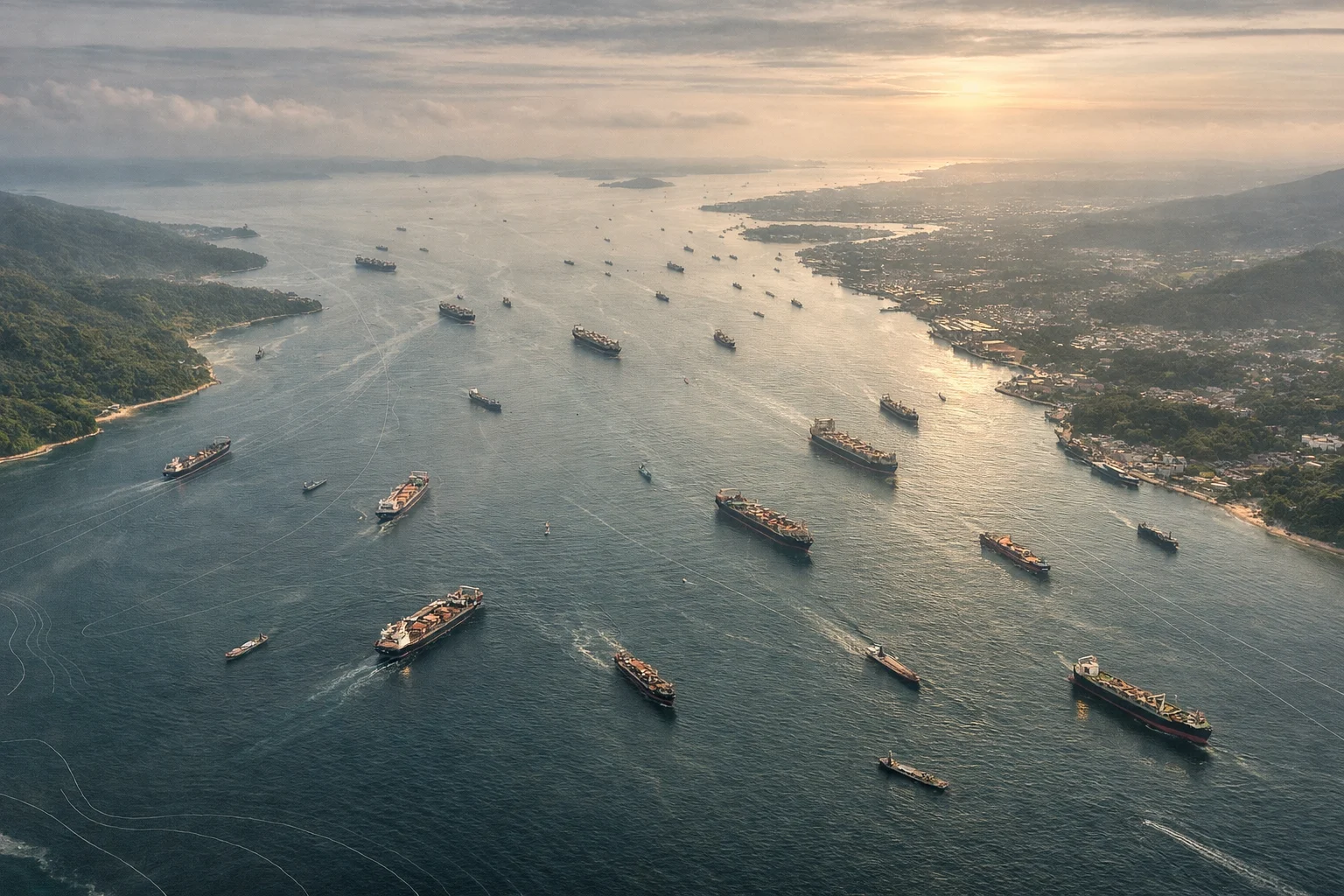
The Strait of Malacca chokepoint is a narrow gate between the Indian and Pacific oceans. When it slows, costs ripple across fuel, goods, and finance. That is why American consumers feel distant shipping shocks at the pump and in carts. Geopolitics amplifies the effect, as seen in this clear explainer on Strait of Hormuz leverage and in a broader look at U.S. geography power. This guide connects sea lanes to U.S. prices, showing how a thin waterway can fatten receipts.
Historical Context
From spice routes to container ships
For centuries, traders tracked monsoon winds through Malacca’s tight channel between Sumatra and the Malay Peninsula. Sailors once moved pepper and textiles; today, the ships carry crude, LNG, refined products, electronics, and auto parts. The route funnels Indian Ocean traffic into the South China Sea and onward to Asia’s factory hubs and consumption giants.
Alternatives exist—the deeper Lombok and Makassar passages—but they add time, fuel, and insurance. That friction is what turns a narrow waterway into a strategic amplifier. History offers a long lens on this idea: maritime bottlenecks have always shaped prices and power, a pattern traced in the evidence-led study of seafaring in Phoenicians and the Sea.
Why geography still rules
Malacca’s proximity to Singapore and Indonesian waters concentrates traffic, pilots, and port services. That density is efficient when things work; it is fragile when they do not. The logic mirrors other flashpoints. The Taiwan Strait is another corridor where inches on the map translate into changes in risk and cost, as summarized in Taiwan Strait crisis history. The same lesson holds here: the Strait of Malacca chokepoint is an economic hinge disguised as a line on the chart.
Key Facts and Shipping Realities
What flows through—and why it matters
Energy cargoes and manufactured goods dominate traffic through Malacca. The U.S. Energy Information Administration classifies Malacca among the world’s critical oil transit bottlenecks, alongside Hormuz and Suez. Disruptions in such corridors affect global benchmarks that set gasoline, diesel, and jet fuel prices for Americans, regardless of where a given barrel is pumped. See the EIA’s overview of world oil transit chokepoints.
On the container side, when carriers face delays or longer routes, charter rates and insurance premiums rise. Ports reorder schedules, and retailers start to rebuild buffers. Small delays become bigger costs because time at sea is money. That is the practical meaning of a chokepoint: it converts minutes into margins, a dynamic especially visible in the Strait of Malacca chokepoint.
Risk feels physical on the bridge
For mariners, this is not an abstract index. It is tight traffic separation schemes, radio calls, pilotage, and weather windows. Near misses, seizures, or even rumors move market prices. Industry memory compounds this caution. After catastrophic events, decision-makers price safety higher for a while. You can see how shocks reshape risk appetite in the narrative of the Deepwater Horizon blowout, a different domain with similar psychology. The result in Malacca is a premium on certainty—and a premium paid by consumers when certainty erodes.
Analysis / Implications
The pass-through to U.S. prices
How does a bottleneck a hemisphere away touch U.S. wallets? First, oil and refined products trade on global benchmarks. If Asia-bound cargoes detour around the Strait of Malacca chokepoint, longer voyages and higher risk premia lift world prices. U.S. drivers and airlines buy at those prices. Second, higher container costs feed into import prices for electronics, appliances, and apparel. UN Trade and Development has estimated that sustained freight spikes can push import prices and, with a lag, consumer prices higher; see UNCTAD’s 2024 Review of Maritime Transport (Chapter 3).
The size of the effect varies with the shock. A one-off delay may barely register. A multi-week disruption can add tenths to inflation during the pass-through. U.S. margins and inventories soften the blow, but not forever. Energy, transport, and retail each take a slice before the checkout total changes.
Energy geopolitics intensifies the link
When supply is tight, every mile matters. Detours through Lombok or Sunda tie up tankers and containers, effectively shrinking fleet capacity. That pushes up rates and energy quotes simultaneously. Shifts elsewhere can magnify the effect. If other producers face strikes or sanctions, buyers bid up scarce barrels and shipping slots. For a hemispheric example of how geography and barrels intersect, see this overview of why Venezuela still matters strategically. The takeaway is straightforward: in tight markets, the Strait of Malacca chokepoint becomes a force multiplier.
Case Studies and Key Examples
1) A short detour that isn’t short
Imagine an incident that makes Malacca temporarily risky. Carriers shift to the deeper Lombok or Makassar Strait. The route is longer and burns more fuel. Schedules cascade. That lost time raises charter rates; insurers adjust war risk premia; shippers add buffers. Even if U.S.-bound ships do not use Malacca, global prices reflect higher costs somewhere else. Refineries compete for the same barrels; retailers compete for boxes and berths. Within weeks, fuel quotes tick up and certain goods edge higher. The Strait of Malacca chokepoint transmits the shock through money, not miles.
2) Piracy, patrols, and the price of vigilance
Two decades ago, the region saw spikes in piracy and armed robbery. Coordinated patrols and better tracking reduced incidents. The lesson is durable: when risk perception falls, insurance and freight costs follow. When risk perception rises, costs return. The corridor’s complexity—national waters, traffic density, and the proximity of major ports—means vigilance never ends. That’s why the Strait of Malacca chokepoint is best understood as a managed system rather than a fixed hazard.
3) Electronics, LNG, and the U.S. consumer
Consider a U.S. retailer sourcing components from Malaysia or assembly from Singapore. A two-week period of elevated rates can force choices: accept thinner margins, stagger promotions, or pass some costs on. Consider also LNG flows from the Gulf to East Asia that typically pass Malacca. If detours make Asian buyers pay more, global gas markets reprice, affecting U.S. utilities and petrochemicals at the margin. The effect varies by season, storage, and contracts—but the direction is predictable when the Strait of Malacca chokepoint tightens.
4) Cross-chokepoint echo effects
Maritime strains rarely occur alone. Pressure in the Red Sea or Suez can pull capacity away from Asia, and Pacific storms can stack delays just as Malacca gets crowded. Strategy also bleeds across theaters. Lessons about signaling and deterrence at one corridor often apply to another, as outlined in the Taiwan Strait crisis history. In practice, operators plan for “compound chokepoints,” where multiple bottlenecks turn scheduling into chess.
Conclusion
Chokepoints are how geography speaks to prices. The Strait of Malacca chokepoint concentrates ships, timelines, and insurance in a narrow space. When confidence dips, costs spread through oil benchmarks, freight markets, and retail math—until a distant delay lands on a U.S. receipt. The policy response blends deterrence, diplomacy, and redundancy: more storage, diversified sourcing, and smoother information. Those tools do not erase geography. They make it predictable.
Understanding the politics behind energy routes also helps. Gulf dynamics, from revolution-era legacies to modern alignments, shape risk tolerance and shipping choices; see how the 1979 Iranian Revolution still shapes Iran and the deeper roots in the 1953 Iran coup legacy. Keep the map in mind and the mechanisms clear. Then a headline about Malacca becomes a forecast, not a surprise.