Ancient Optical Communication Signals: How Beacons Sent News
Ancient Optical Communication Signals were the fast lane of the pre-modern world. Empires linked hills and harbors with fire, smoke, mirrors, and flags. A lighthouse beam or a torch code could travel faster than any horse. The idea still fascinates us, from the Pharos of Alexandria to mythic beacon chains. For a wider frame on those monuments, see the clear guide to the Seven Wonders of the Ancient World and the political backdrop captured by the Seven Kings of Rome.
Historical Context
From campfires to coordinated beacons
Early communities used light as signal long before writing spread. Hunters flashed flames to gather, and shepherds waved torches at night. With larger states came organized watch posts. A single blaze on a ridge could warn a valley. A chain of fires could alert a province. That simple relay solved one core problem: time. Riders still carried details later, but light delivered the headline first—“danger,” “victory,” or “come home.” This is the essence of Ancient Optical Communication Signals: compress a message, push it across sightlines, and let receivers unpack it locally.
Ancient historians noticed the method. Aeschylus dramatized a chain that leapt from Troy to Greece. Hellenistic engineers refined the practice with towers, mirrors, and timed torch displays. Romans embedded beacons in frontier systems alongside roads and couriers. For a concise primer on what a “beacon” meant in practice—signal fires, day and night codes—see Encyclopaedia Britannica’s overview of beacons. On Rome’s earliest myths and geography, cross-read the note on the city’s beginnings: the Foundation of Rome.
Why light beats legs, and what limits it
Light outruns horses because photons ignore roads. Yet optical networks have strict constraints. They need clear skies, trained crews, and line-of-sight posts. They also require minimal, consistent codes. A column of smoke says little; a sequence of torches says more. Ancient operators balanced cost and meaning. Many systems stuck to binary alerts: “threat” or “peace.” Others invested in alphabets and tables to trade speed for nuance. Cities also built towering signals that doubled as landmarks—hence lighthouses and hilltop beacons. When fires raged by accident, interpretation mattered too; see the analysis of urban flames in the Great Fire of Rome.
Key Facts and Eyewitness Sources
Writers who saw, and systems they described
Ancient writers left snapshots of the system as they encountered it. Aeschylus described long-range relays in verse. Polybius sketched a method that assigned alphabetic values to torch positions and counts. His approach allowed short phrases, not only alarms. Later scholars compared variations that used boards, grids, and pre-agreed tables. These texts show two stable patterns: minimal beacons for speed, and richer codes for command. Together they map the trade-off at the heart of Ancient Optical Communication Signals.
Polybius’ name now labels the best-known scheme, the Polybius square. It maps letters into coordinates expressible by pairs of torches. It is compact, teachable, and robust against noise. For a reference outline of the basic idea, see Britannica’s entry on the Polybius square. Culture mattered too. Festivals, theaters, and processions trained crowds to read light and motion at scale; that social literacy helped operators deploy codes quickly in public spaces, a theme echoed in what Ancient Greeks did for fun.
Analysis / Implications
Speed, compression, and trust
Speed alone does not win wars or move economies. Meaning must arrive intact. Optical relays force compression: few symbols, simple timing, strict drills. Those constraints sharpened planning habits. Commanders wrote shorter messages. Governors standardized alerts. Communities rehearsed responses to one-bit news. Reliable compression also built trust. When a ridge flashed twice, farmers knew to move livestock; when it flashed thrice, militias assembled. That confidence required training and redundancy, just like any network today.
Weather was the wild card. Fog or rain could break links for days. Ancient systems mitigated risk with overlapping posts, day and night codes, and messenger backups. They treated beacons as a fast layer atop slower couriers. The model feels modern: a lightweight protocol for urgent headers, plus a heavier channel for detail. This layered thinking is why Ancient Optical Communication Signals shaped administration as much as warfare.
Case Studies and Key Examples
Beacon myths that taught real engineering
Greek drama popularized the image of coastal fires bounding from isle to isle. Whether any specific chain covered legendary distances is less important than the shared lesson: placement. Operators learned to site posts on clear ridges, doubling lines to survive weather. Harbors added mirrored heliographs to catch sun by day and flames by night. The idea of a canonical, pre-surveyed route influenced later coastal defense lines. Those lines primed states to adopt rational towers, schedules, and duty rosters as standard craft.
Pharos of Alexandria: light as policy
The lighthouse at Alexandria turned guidance into power. Its flame and mirrors projected a promise: safe entry, active trade, and state capacity. Mariners read it as a message, not just a lamp. That message traveled far because it repeated nightly, never relied on a rare coincidence, and tied to clear outcomes. The Pharos branded a port long before logos existed. For background on such iconic structures and their selection by later writers, compare the survey of the Seven Wonders.
Hellenistic alphabets in light
Polybius’ torch table stands out because it scales. With five rows and five columns, two gestures transmit any letter of a 24-letter Greek set. Teams could learn it quickly. Receivers could write it as they read. The design invites modular growth: add numbers or abbreviations, and the code grows without changing the core timing. It is the ancestor of later flag and lamp systems. This is Ancient Optical Communication Signals at its most refined: consistent, teachable, and expandable.
Rome’s frontiers: overlapping layers of alert
On Rome’s edges, towers worked alongside patrols. Soldiers triggered fires at night and smoke by day, then dispatched riders with details. Civil authorities linked hills over river crossings and road junctions. The same logic governed cities. Villa districts posted watchers during dry seasons. A bad glow could mean wildfire or revolt; officials needed context from follow-up messengers. The urban memory of disaster, explored in the Great Fire of Rome, kept citizens attentive to light on the skyline.
Wartime relays: from Gaugamela to provincial crises
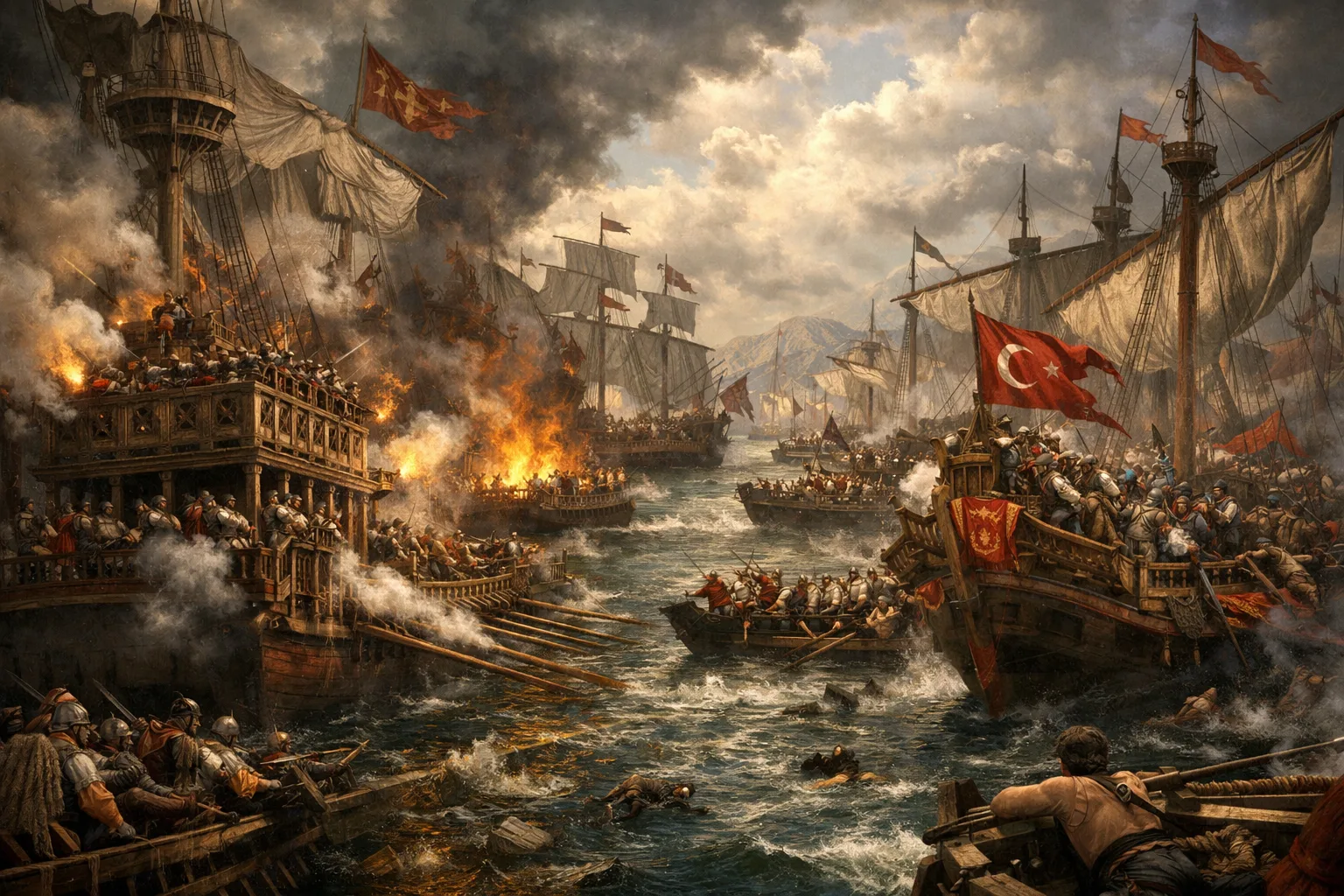
Armies pushed signaling hardest. On open plains, flags and torches marked orders that horns could not carry. Commanders rehearsed maneuvers tied to visual cues. In the east, Hellenistic states and rival empires used ridge chains to move news about invasions. In the west, commanders adapted the same logic to river valleys and coasts. For a concrete battlefield frame, read the account of Alexander’s command tempo at Gaugamela. Civil networks adapted those wartime habits in peacetime emergencies.
Sieges and signals: Masada and beyond
Sieges demanded precise coordination. Camps needed synchronized assaults, rotating watches, and rapid warnings. Torches and smoke gave defenders and attackers the cheapest shared protocol. Roman logistics around Judaea likely blended bonfires, lanterns, and runners. At Masada, desert visibility shaped timing and deception. The broader lesson holds anywhere: optical cues thrive where sound fades and paths are few. See the high-level context in the long-view narrative of the Siege of Masada.
How the Technology Worked
Hardware: flames, mirrors, and elevation
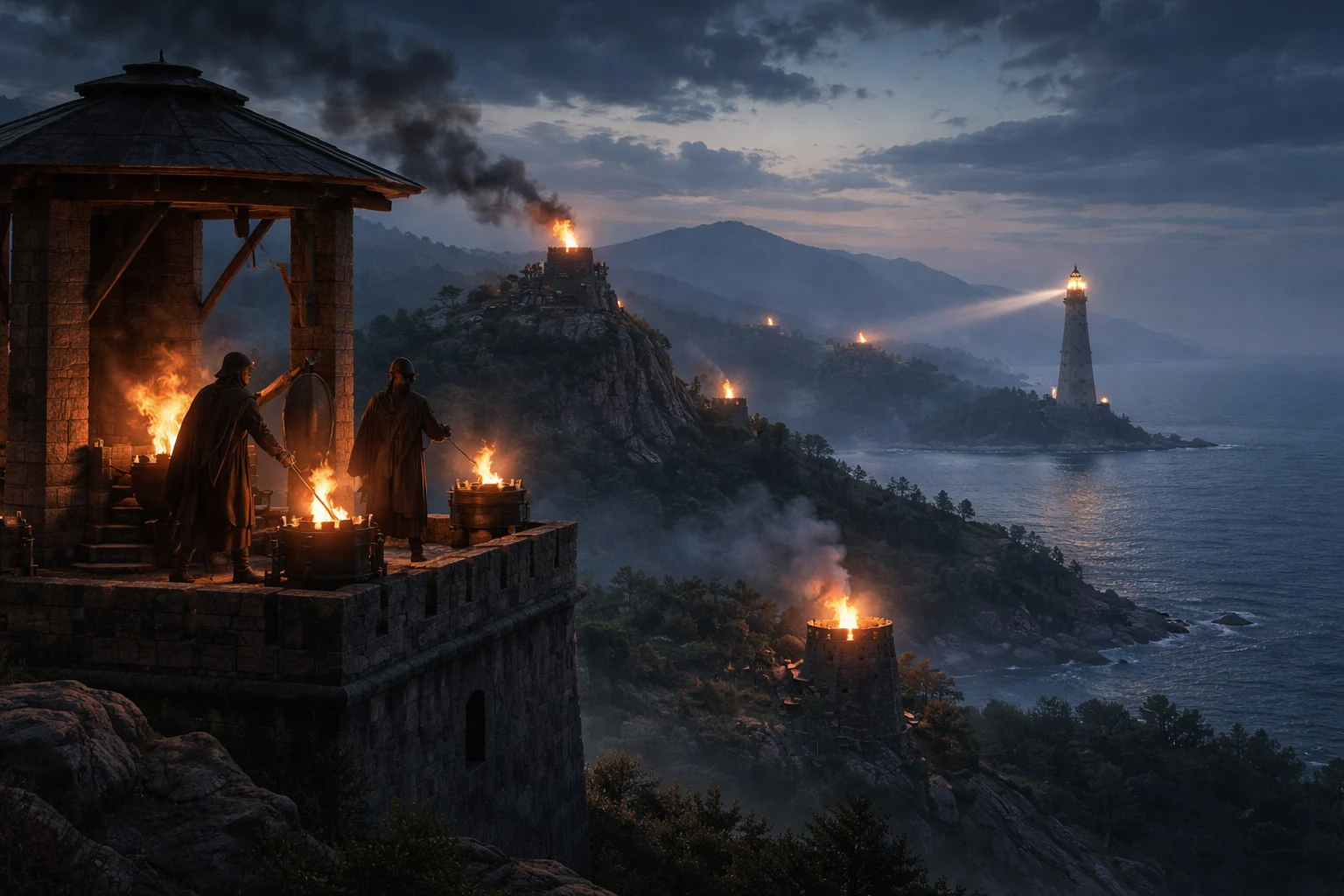
Materials were humble. Dry wood, resin, and oil made bright flames. Bronze or polished metal served as mirrors. Cloth hoods and shutters controlled light. Builders prioritized height and stability. A low hill beat a tall but smoky tower. Operators cleared trees and smoke traps along the line. By day, smoke columns and mirrored flashes carried messages; by night, bare flames or hooded lamps did the job. Elevation multiplied power by opening sight corridors.
Teams drilled. They synchronized clocks by the sun, counted beats for spacing, and wrote logs. The routine kept drift in check. With practice, veteran crews could move short coded phrases across dozens of miles in minutes. That velocity made Ancient Optical Communication Signals the premier “breaking news” channel of its time.
Software: codes, timing, and error control
Successful relays built discipline into their codes. Operators avoided rare symbols. They grouped letters by frequency and used abbreviations for stock phrases like “enemy sighted” or “send grain.” Timing rules were strict: hold, pause, repeat. Redundancy came from echo posts that confirmed reception. In bigger systems, supervisors checked logs at intervals and punished sloppy rhythms. The result was not glamorous, but the total system worked. It converted light into decisions as long as crews had lines, drills, and rest.
Risks, Costs, and Workarounds
Fog, false positives, and human factors
Weather broke many links. Mountain fog, sea haze, and dust storms scattered signals. Crews adapted with backups. They added lowland alternatives, increased post density, and assigned mobile teams to fill gaps. Human errors mattered too. Fatigue blurred counts. Panic sped timing. To tame mistakes, systems standardized shifts, rotated tasks, and used paired readers. False positives were a known hazard. Cities learned not to panic at a lone glow without a confirming echo.
Fire was a friend and a threat. A beacon could drift into accidental alarm if a hillside burned. Urban conflagrations forced officials to weigh noise against signal. That institutional memory explains why some towns codified light patterns for disasters, then drilled them yearly. The method borrows from festival rhythms people already knew, as the social fabric behind public events in Greek leisure culture suggests.
Why It Still Matters
Design lessons in plain sight
Modern networks hide inside chips and cables. Yet their logic mirrors ancient light relays. Keep payloads short for first response. Confirm reception before you act. Layer fast alerts with slower detail. Train operators and log events. Build redundancy where terrain allows it. These lessons travel. They help emergency planners, foresters, and coastal towns use low-tech backups when power fails. They also remind strategists that clarity often beats complexity under pressure. Ancient Optical Communication Signals endure as a model of lean, resilient communication.
The same instincts recur in later eras. Decoys, visual cues, and timing tricks mislead adversaries not by brute force but by controlling attention. For a vivid modern echo, contrast optical truth with illusion in the Ghost Army of WWII. For the human side of covert messaging, consider the POW who blinked a single word on camera, told in Jeremiah Denton’s story.
Conclusion
Beacons were the world’s first push notifications. They turned hills into routers and light into bandwidth. The method was cheap, fast, and fragile, yet it shaped policy and war. Operators learned to compress meaning, drill routines, and trust verification. Those are evergreen skills. When storms cut power or radios fail, a lamp in a window still carries a message. Ancient Optical Communication Signals show how much can be done with little more than fire, rhythm, and sight—if people prepare.
To trace how states turned optical cues into narratives and morale, jump from antique towers to modern deception in the account of the Ghost Army. Then pivot to the ethics and courage behind clandestine signals under duress with Denton’s blinked confession. Across eras, the core design choice remains the same: trade complexity for clarity when seconds matter.