Sea Peoples Bronze Age: Who Were The Raiders, Really?
The phrase Sea Peoples Bronze Age evokes burning ports, broken palaces, and refugee fleets. Between 1200 and 1150 BCE the eastern Mediterranean convulsed. Empires fell; cities vanished. Scholars still debate who these raiders were and why they came. Were they invaders, migrants, or mercenaries? To frame the puzzle, we cross the Aegean, Anatolia, and Egypt, and test ideas against inscriptions, shipwrecks, and pottery. For wider context on Homeric warfare, see whether the Trojan War really happened, and for maritime trade culture, explore common myths about the Phoenicians.
Historical Context
The Late Bronze Age World at Its Peak
Before the collapse, the eastern Mediterranean was a connected web. Egypt met the Hittites across Syria. Mycenaean palaces traded with Cyprus and Levantine ports. Palatial elites moved copper, tin, timber, oil, and luxury goods. Diplomatic letters spoke of “brother kings,” gifts, and marriages. Merchant convoys relied on safe harbors and friendly garrisons. When this network worked, it supported cities like Ugarit and Hattusa. Egypt’s courts radiated stability down the Nile. This is the stage upon which the Sea Peoples appear. The system’s strengths were also vulnerabilities. Long routes, brittle alliances, and palace monopolies created points of failure everywhere at once.
The Turning Point: 1200–1150 BCE
Destruction layers stack across the map in these years. Hattusa fell. Ugarit burned. Several Mycenaean centers were abandoned or rebuilt in simpler style. Egypt fought two major campaigns against northern and western foes. Climatic stress likely tightened the noose. Pollen records and regional drought proxies fit a picture of harvest failures and famine. Earthquakes rattled the Aegean’s fault lines. Pirates, migrants, and dismissed soldiers tested coastal defenses. In this turbulence, groups recorded by Egyptian scribes—later dubbed the “Sea Peoples”—moved by land and sea. The Sea Peoples Bronze Age story begins inside this wider systems shock, not apart from it.
Key Facts and Eyewitness Sources
What Egyptian Texts Actually Say
The primary narratives come from inscriptions of Merenptah and Ramesses III. They name groups such as the Sherden, Shekelesh, Ekwesh, Teresh, Peleset, Denyen, Tjekker, Weshesh, and Lukka. These are not explained as one nation. They appear as named peoples allied with Libyans or moving families and carts toward Egypt. Ramesses III’s reliefs at Medinet Habu describe an overland advance and a sea battle in his Year Eight. Modern scholars rely on translations preserved by Egyptologists; see the translations of the Medinet Habu texts for the baseline record. These texts present victories but also hint at scale: coordinated groups, wagons, and ships.
Letters from Ugarit and the Archaeological Trail
At Ugarit, a desperate royal letter reports enemy ships and urgent pleas for help. The city soon fell, leaving a burned archive. Across Philistia, pottery abruptly shifts toward Aegean styles. Mycenaean IIIC-type vessels appear at Ashkelon, Ashdod, Ekron, and other sites. Hearths, cooking habits, and some house plans echo Aegean practice. Pig bones rise in faunal assemblages, a cultural marker in the southern Levant. Together, these clues support groups with Aegean ties settling along the coast. Yet the material record shows blending. Local Canaanite traditions persist, and imported styles evolve locally. The Sea Peoples Bronze Age pattern looks less like a single invasion, more like waves of mixed migrants, fighters, and artisans.
Analysis / Implications
Who Were the ‘Sea Peoples’—Raiders, Migrants, or Mercenaries?
All three, at different times and places. Lukka and Sherden show up earlier as pirates and hired swords. In the crisis decades, family carts suggest resettlement. Philistine towns prosper in the Iron I period, pointing to migration that stuck. Egypt’s own army absorbed captured foreigners. The same name in one text can mark raiders, later subjects, or settlers. The safest model treats the Sea Peoples Bronze Age label as a shorthand for several groups reacting to a regional breakdown. Drought, earthquake clusters, trade shocks, and palace failures created push and pull. These forces turned sailors into migrants and mercenaries into founders.
Why the Label Misleads—and What It Gets Right
“Sea Peoples” is a modern umbrella, not an ancient self-name. It risks suggesting a single ethnicity or league. The texts never say that. They list peoples and describe movements by land and sea. What the label gets right is the maritime dimension. Ships stitched the crisis together. Coastal towns fell first and hardest. Egypt fought a sea battle in the Delta. Philistia’s earliest material culture shows strong Aegean links. For a neutral overview of the idea’s evolution, see Encyclopaedia Britannica’s entry on the Sea Peoples. The Sea Peoples Bronze Age story is best read as a maritime migration inside a continental collapse.
Case Studies and Key Examples
Medinet Habu, Year Eight of Ramesses III
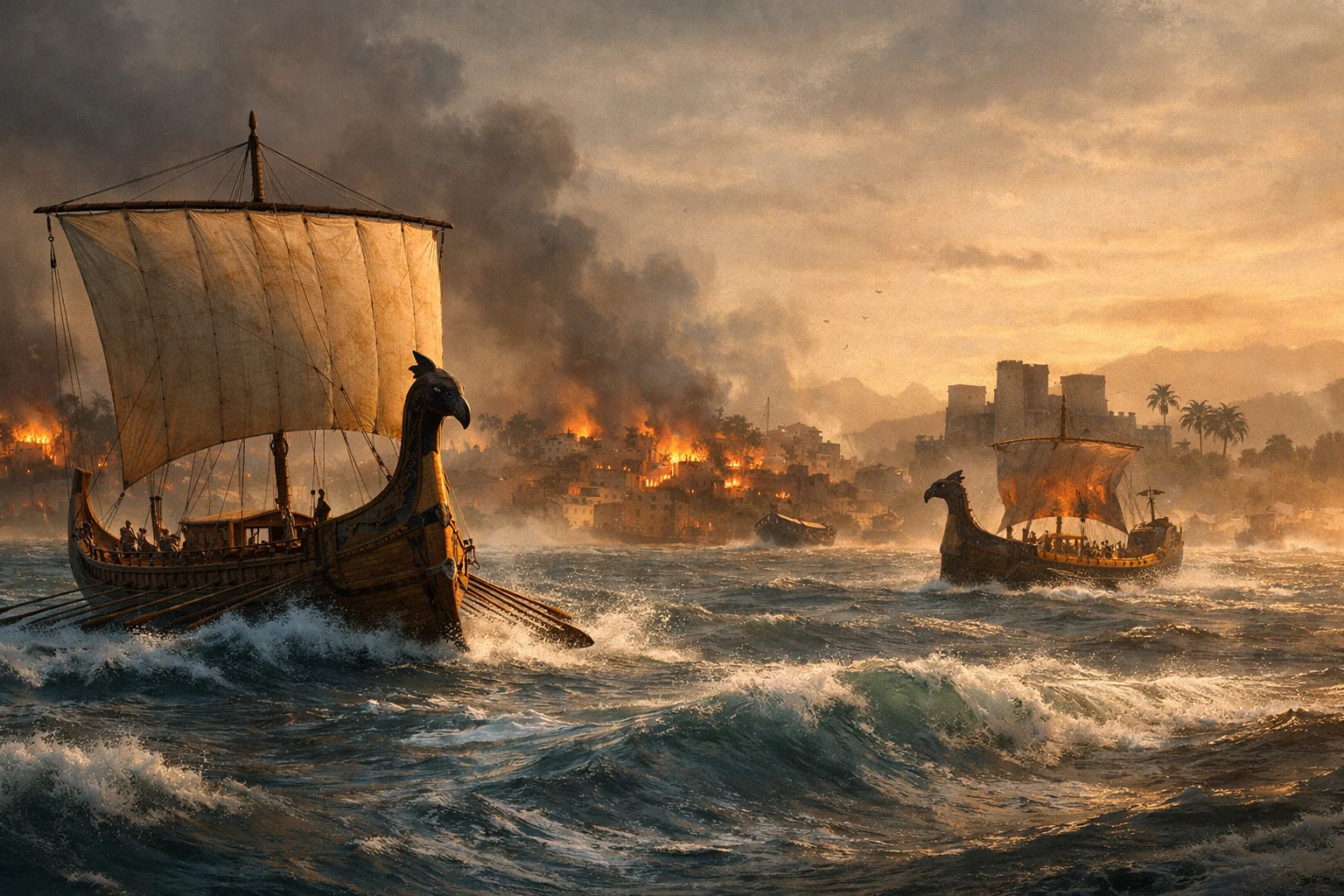
Ramesses III’s reliefs show a fleet engagement and a blocked river mouth. Egyptian ships trap enemy vessels with archers and grapnels. On land, carts and families accompany warriors. The relief captions list several peoples working together. The message is royal triumph, yet the context is sobering. Egypt fought at the gates of its Delta. After victory, the king settled some captives as garrison communities. This detail matters. It fits a cycle of conflict, capture, and controlled resettlement. In the Sea Peoples Bronze Age timeline, Year Eight marks Egypt’s defensive success and the migrants’ redirected paths toward the Levantine coast.
The Philistine Pentapolis in Canaan
By the early Iron Age, five cities anchor Philistia: Gaza, Ashkelon, Ashdod, Gath, and Ekron. Pottery, cooking jugs, loom weights, and building habits reveal Aegean influence. Over generations, traits hybridize with local styles. Textiles, metallurgy, and trade revive. This evolution argues for migrants who brought know-how and adapted fast. The pentapolis becomes a Mediterranean crossroads again, but under new elites. For a vivid royal backdrop to Egyptian high culture of the period, see the portrait of Tutankhamun and New Kingdom Egypt—a world soon forced to absorb change along its northern shores.
Collapse of Hatti and the Fate of Ugarit
The Hittite capital Hattusa vanished from the diplomatic map. Whether enemies, famine, or internal strain dealt the final blow, the result was fragmentation. Dependent vassals lost their protector. Ugarit, a key harbor tied to Hatti and Cyprus, burned after warning letters about enemy ships. When a hub like Ugarit fails, merchants, sailors, and soldiers scatter. Some turn pirate; others hire out or move families to safer coasts. This is the human edge of the Sea Peoples Bronze Age problem—chains of ordinary decisions multiplied by crisis.
Names in the Lists: Sherden, Peleset, Denyen, and Others
Egyptian scribes name groups with debated homelands. Sherden are sometimes linked to Sardinia. Shekelesh to Sicily. Peleset to the Philistines of Canaan. Denyen to Aegean “Danaans.” Lukka to Lycia. These proposals rest on phonetic echoes and later traditions, not straight lines of proof. Origins may be plural, and names can travel with leaders, not masses. What matters most is what the texts show: allied contingents, mobile families, and maritime reach. In the aggregate, the Sea Peoples Bronze Age label captures a multi-origin migration that reshaped the eastern Mediterranean’s coast.
Historical Context, Revisited: Stories We Tell Ourselves
From Epic Memory to Archaeology
Long after the fires cooled, stories grew. Greek epic turned memory into poetry. Heroes like Achilles and Hector faced each other at Troy. These tales do not explain the collapse, yet they preserve a world of ships, bronze, and city sieges. For character-driven context, read profiles of Achilles and Hector of Troy. Archaeology balances these legends. Destruction layers, ceramics, and diets ground the narrative. The evidence supports neither a single invasion nor a gentle migration. Instead, it sketches messy change.
Migration, Identity, and the Birth of New Polities
When networks collapse, identities recombine. Former mercenaries become border guards. Refugees become citizens. Port towns absorb new crafts. The Philistines build and trade. Canaanite cities revive under new rules. Egypt hardens its Delta. The fabric of the Iron Age is stitched from these choices. The most durable insight from the Sea Peoples Bronze Age debate is human adaptability under stress. New polities emerge because people move, marry, and make do.
Analysis / Implications for Today
Systems Failures and Human Mobility
No single cause explains the collapse. Climate stress, earthquake clusters, supply shocks, and political fracture amplified one another. Mobility is the human response to compounded risk. When granaries fail and allies vanish, ships sail. The eastern Mediterranean became a laboratory of forced adaptation. Recognizing this pattern helps us read other sudden transitions. It also cautions against neat labels. The Sea Peoples Bronze Age shorthand should prompt questions, not close them.
How to Read the Evidence Without Overreach
Start with the inscriptions and their limits. Add stratigraphy, ceramics, and faunal data. Note that names are not ethnic proofs. Allow mixed origins and changing roles. Keep the maritime lens wide. For a broad primer before diving into specialist debates, use Britannica’s overview. Then test each claim against the base texts you can consult through the Medinet Habu translations linked above. This method keeps speculation from outrunning evidence.
Conclusion
The “who” behind the Sea Peoples is not one tribe but many lives. Pirates in good years became migrants in bad ones. Mercenaries who fought Egypt one season guarded its borders the next. Families on carts followed warriors onto new shores. The coastal Levant absorbed them, adapted, and thrived again. That is the heart of the Sea Peoples Bronze Age story: resilience after rupture.
If this era fascinates you, explore how legendary migrations shaped Rome in the Aeneas and Romulus tradition, and widen the Egyptian backdrop with evidence about pyramid engineering. To place collapse beside cultural achievement, see the ancient world’s landmarks through the Seven Wonders, and test daily life images against what ancient Greeks did for fun. The past speaks clearest when many strands weave one story.