Great Polar Expeditions Race: Why Nations Chased The Poles
The Great Polar Expeditions Race gripped the world because flags, science, and pride converged on ice. It followed older quests, from the Vikings exploration timeline to Marco Polo’s overland journeys. By the late nineteenth century, newspapers could turn explorers into stars overnight. Telegraph cables shrank distance. Cameras brought ice into living rooms. In this frenzy, the polar regions promised the last blank spaces on the map and the purest tests of national vigor. The result was a sprint, sometimes noble, sometimes tragic, always public.
Historical Context
From empire to science
By 1850, European empires competed across oceans and deserts. Exploration served power, trade, and prestige. Earlier models existed, like Ming China’s blue-water diplomacy led by Zheng He’s treasure fleets, which proved how expeditions could project status without conquest. In the nineteenth century, a new motive rose: science. Meteorology, magnetism, and oceanography promised practical gains. The polar regions, with their clean air and magnetic peculiarities, became natural laboratories.
At the same time, the press loved drama. Freezing winds and white horizons made compelling copy. The Great Polar Expeditions Race turned ice into a stage for national identity. A planted flag could signal modernity as loudly as a factory. This mix of motives—empire, science, and spectacle—set the conditions for the rush to the North and South Poles.
Imperial rivalry, Russian breadth
Empires framed the contest. Britain and Norway chased the South Pole. The United States and Scandinavia pushed into the Arctic. Russia’s long northern frontier gave it a distinct polar logic that stretched back to the tsars. Ambition under enlightened rulers like Catherine the Great had promoted science and cartography. That tradition later fed systematic polar mapping and drifting-station science. Across Europe, geophysical congresses, learned societies, and naval ministries blended scholarly curiosity with patriotic urgency. When the public demanded heroes, governments found reasons to fund sledges, ships, and airships.
Key Facts and Eyewitness Sources
Polar expeditions generated an unusual documentary record. Officers kept disciplined logs. Crews wrote letters that survived in family trunks. Photographers hauled glass plates into blizzards. These eyewitness traces fueled the narrative power of the race and shaped national memory.
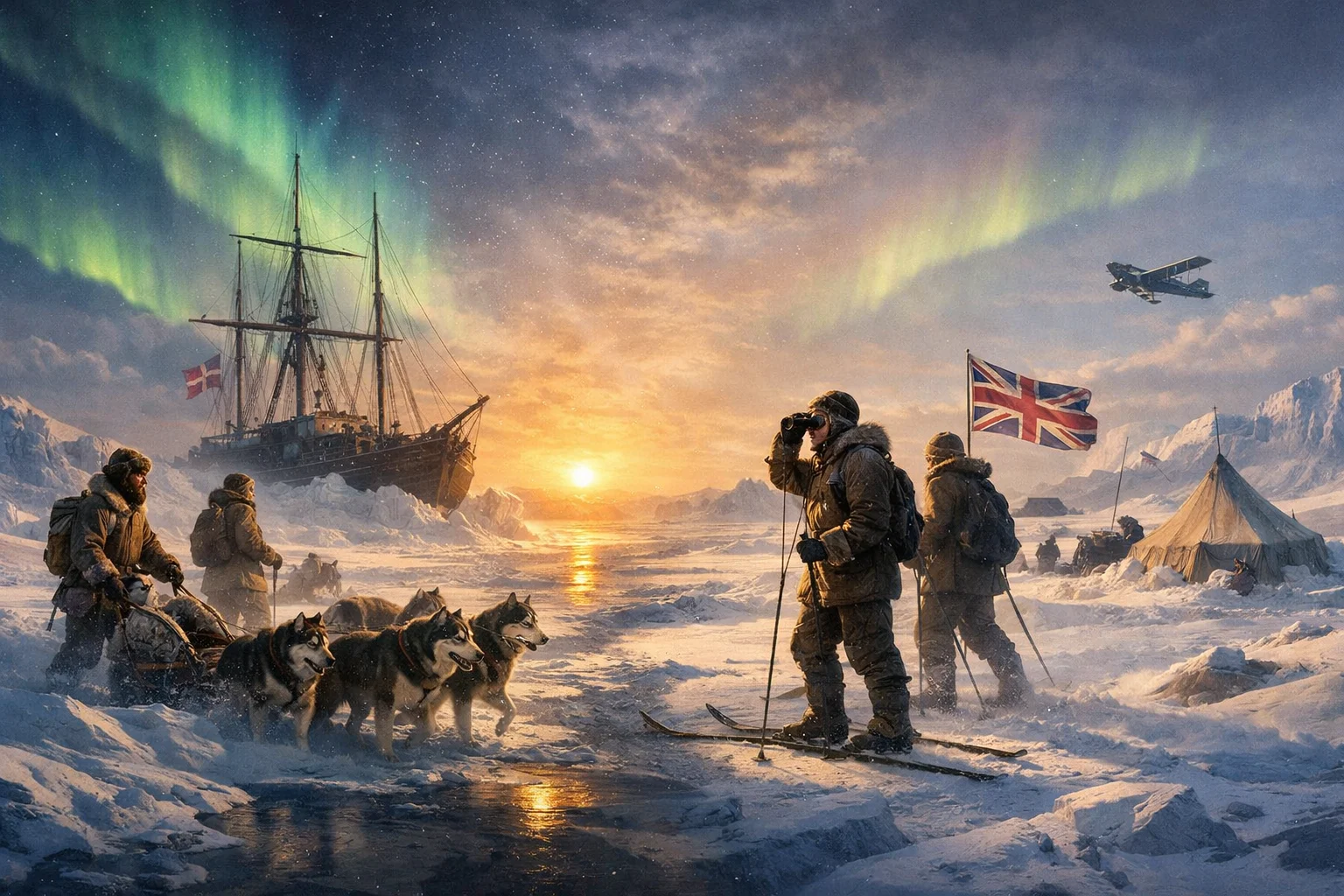
Consider Roald Amundsen and Robert Falcon Scott, the most iconic rivals. Diaries describe their methods and mindsets in real time. Roald Amundsen optimized everything for speed and survival: dog teams, skis, and depot planning. Robert Falcon Scott balanced science with the summit bid, using ponies, man-hauling, and motor sledges. In the Great Polar Expeditions Race, details decided fates: fur versus wool, seal meat versus biscuits, and the fine lines of navigation in whiteout conditions.
Eyewitness accounts also captured how polar hazards felt. A Siberian shock like the 1908 blast at Tunguska, later analyzed in “The Shocking Evidence About Tunguska Explosion,” illustrates the scale of northern mysteries confronting scientists. Such events reinforced the idea that the high latitudes were not only goals but questions—about climate, magnetism, and Earth’s forces—waiting to be answered.
Analysis / Implications
The Great Polar Expeditions Race redefined exploration for the modern age. Earlier voyages sought spices or routes. Polar campaigns sought data, endurance, and symbolic victory. Success required systems thinking: ship design, nutrition, logistics, and risk management.
Logistics was the silent hero. Every mile hauled meant calories calculated months earlier. Much as urban air disasters later forced policy changes—see “The Great London Smog of 1952” for a parallel in atmospheric science—polar failures pushed innovation in clothing, shelter, and cold-weather medicine. The race also matured scientific cooperation. International Polar Years coordinated instruments and standards, even as national flags competed in headlines.
There were cultural effects too. Explorers became archetypes: the methodical Norwegian, the stoic Briton, the restless American, the meticulous Russian. These stereotypes oversimplified reality, yet they helped nations tell themselves who they were. The lasting implication is institutional: today’s polar research stations, icebreakers, and satellite networks descend directly from techniques refined during this intense era.
Case Studies and Key Examples
Amundsen vs. Scott, 1911–1912
The Great Polar Expeditions Race reached its dramatic peak when Amundsen beat Scott to the South Pole by more than a month. Amundsen’s strategy relied on tested Arctic skills and dog power. Scott blended science with ambition, collected valuable specimens, and documented conditions meticulously. The tragedy of Scott’s return amplified the story. Newspapers framed it as noble sacrifice. Amundsen’s victory looked clinical, almost modern. The contrast fixed two paths for future expeditions: optimize ruthlessly or broaden aims and accept risk.
Nansen’s Fram and drift science
Fridtjof Nansen’s Fram expedition (1893–1896) pioneered polar drift science. He designed a hull to survive ice pressure and let the pack carry the ship. This method turned the Arctic from obstacle to conveyor belt. The Great Polar Expeditions Race borrowed that logic: understand the environment deeply, then align plans to its rhythms. Fram’s observations of currents, ice dynamics, and magnetism seeded datasets that later underpinned climate models and sea-ice forecasting. Strategy shifted from heroics to systems.
Byrd’s flights and media modernity
Richard E. Byrd popularized polar aviation with his 1926 North Polar flight claim and later Antarctic operations. Planes and radios amplified the spectacle. Sponsors understood the marketing value. The Great Polar Expeditions Race left a template for expedition branding: technical novelty, bold goals, and real-time storytelling. That template survives in today’s science livestreams from polar stations and in the way space agencies narrate missions. Media did not merely report the race; it helped create it.
Why Nations Cared: Motives Behind the Race
Prestige and soft power
Planting a flag at the Pole promised a clean headline. In an age of contested borders and rising literacy, that headline mattered. It signaled modern capability without colonial entanglements. Schools taught the achievement as proof of national character. The Great Polar Expeditions Race thus served diplomacy at home and abroad, shaping reputations among rivals and allies.
Science with strategic spillovers
Polar meteorology improved weather prediction for farms and fleets. Magnetic surveys refined navigation for commerce. Sea-ice charts helped fishing and shipping. Cold-weather medicine reduced casualties in armies. Even failures delivered value. When depots missed or machines froze, engineers learned. Policy makers could justify budgets because benefits touched economy and defense, not just glory.
Tools, Tactics, and Survival
Planning and redundancy
Polar success depended on conservative planning. Redundant depots, multiple navigation checks, and a margin for storms. Clothing evolved from wool layers to fur combinations optimized by Indigenous knowledge. The Great Polar Expeditions Race pushed teams to copy effective local practices rather than impose theory on ice.
Nutrition and health
Calories were currency. Seal meat, pemmican, and vitamin-rich rations helped prevent scurvy. Hydration routines reduced frostbite risk. Small decisions—like drying socks in tents or airing sleeping bags—saved lives. Medical logs from the era read like field handbooks for modern expedition medicine.
Legacies for Today
From maps to models
Yesterday’s compasses became today’s satellites. Ship logs became reanalysis datasets. The discipline of meticulous observation survived the hero age. Modern climate science and oceanography still lean on polar boundary conditions first documented by sledging parties and drift ships. The organizational lessons remain, too: clear roles, rigorous checklists, and frank risk assessments.
Culture and memory
Museums, films, and schoolbooks keep the race alive. Yet the story is larger than heroes. It is about institutions that learned to plan under uncertainty. It is about how nations used science to define themselves. The Great Polar Expeditions Race endures as a mirror of modernity: disciplined, data-hungry, and media-aware.
Conclusion
The poles were never only dots on a map. They were stages where nations auditioned for the future. The Great Polar Expeditions Race fused prestige, science, and logistics into a single drama. From Nansen’s drift to Amundsen’s precision and Scott’s resolve, we inherited methods, not just myths. Those methods—depot planning, risk audits, and standardized observations—shape how we explore harsh frontiers today.
If this story intrigues you, extend your journey. Compare the four voyages of Columbus with modern polar itineraries. Or revisit the seafaring artistry of Harald Hardrada to see how navigation skills evolve across centuries. The race for the poles ended, but its mindset still guides research stations, satellite missions, and every expedition that dares to measure the unknown.