How the CIA Iran Coup 1953 Rewired Global Oil Politics
The CIA Iran coup 1953 is one of the most consequential covert operations in modern history. In a single August week, a democratically elected prime minister was overthrown, a king was reinstalled, and Western oil companies reclaimed access to one of the world’s richest reserves. The shockwaves didn’t stop at Tehran’s city limits — they rippled outward for decades, reshaping how nations control their natural resources, how the Middle East views the West, and yes, how much you pay at the gas station.
Who Was Mohammad Mosaddegh and Why Did He Matter?
Before we get to the coup itself, you need to understand the man at the center of it. Mohammad Mosaddegh was Iran’s democratically elected Prime Minister, brought to power in 1951 on a wave of nationalist sentiment. He was Time magazine’s Person of the Year in 1951. That’s not a trivial detail — it tells you how widely admired he was, even in the West, at least initially.
Mosaddegh had one overriding mission: take back Iranian oil from the Anglo-Iranian Oil Company (AIOC), a British firm that paid Iran a fraction of what its crude was actually worth. Under the AIOC deal, Iran received about 16% of the profits from its own oil. Britain pocketed the rest. Mosaddegh called this what it was — exploitation — and in March 1951, the Iranian parliament voted to nationalize the oil industry.
To understand why this move terrified Western powers, consider the context. The Cold War was at full throttle. Western economies ran on cheap Middle Eastern oil. Control over energy supplies was, as it remains today, a matter of geopolitical survival. If Iran could nationalize its oil and get away with it, what would stop Saudi Arabia, Iraq, or Venezuela from doing the same?
The British Response: Boycott and Pressure
Britain’s first move was economic strangulation. The British government organized an international boycott of Iranian oil, pressured shipping companies to avoid Iranian ports, and froze Iranian assets in British banks. Iran’s oil revenues collapsed almost overnight. The strategy was simple: make nationalization hurt so badly that Iranians would beg to return to the old deal.
It didn’t work. Mosaddegh held firm, and his popularity at home only grew. So Britain turned to the Americans for help — and found a willing partner in the newly inaugurated Eisenhower administration, which was far more receptive to covert action than Truman had been.
What Was Operation Ajax and How Did It Actually Work?
The CIA called its operation “Ajax.” The British called theirs “Boot.” Together, they were a masterclass in manufactured chaos. The plan had several interlocking parts, and understanding them reveals a playbook that would be reused many times in the decades that followed.
First, the CIA pumped money into Iranian media to run anti-Mosaddegh propaganda. Newspapers were paid to print stories portraying him as a communist — or at best, a useful idiot for Soviet ambitions. This was deliberately misleading. Mosaddegh was a liberal nationalist, not a communist. But the Cold War frame made the label stick, at least in Washington.
Second, the CIA hired street gangs and provocateurs to stage fake pro-communist rallies supposedly organized by Mosaddegh supporters. The goal was to frighten middle-class Iranians and the military into believing that Mosaddegh’s government was spiraling toward Soviet alignment. It was theater, expertly staged.
Third, CIA officer Kermit Roosevelt Jr. — grandson of Theodore Roosevelt — bribed Iranian military officers and politicians to shift their loyalty away from the elected government and toward Shah Mohammad Reza Pahlavi, who had briefly fled the country when an early coup attempt failed.
On August 19, 1953, the operation reached its climax. Pro-Shah military units seized key government buildings. Mosaddegh was arrested. The Shah returned from Rome. In less than 24 hours, a democracy was dismantled by foreign hands.
What Happened to Iranian Oil After the Coup?
Here’s where the oil politics get really interesting — and revealing. After the Shah was restored to power, the nationalization of Iranian oil wasn’t simply reversed. Instead, a new consortium was formed. American oil companies — including giants like Chevron, Gulf, and Texaco — were now cut into the deal. Britain’s AIOC (later renamed British Petroleum, now BP) retained a share, but the United States had effectively used covert action to buy itself a seat at the Iranian oil table.
The consortium deal gave Iran a 50/50 profit split, better than the old AIOC terms, but critically, Western companies retained operational control over extraction, refining, and pricing. Iran had the oil in the ground. The West had the infrastructure and the markets. That asymmetry defined the relationship for the next quarter century.
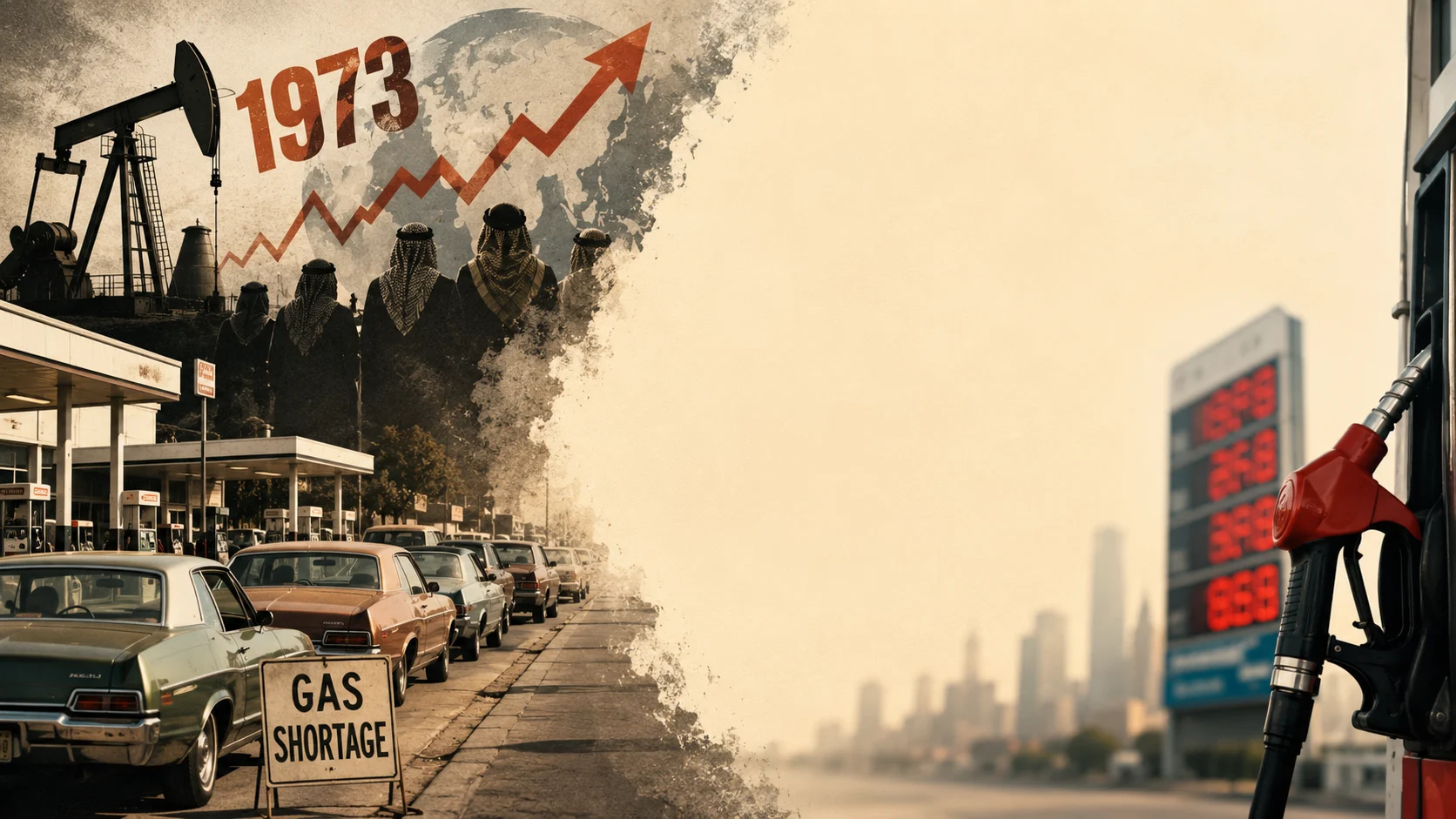
This moment also marked a turning point in how oil-producing nations thought about sovereignty. The lesson from 1953 was brutal but clear: nationalize your oil without Western backing, and you might find yourself facing a coup. That lesson was not forgotten — it echoed loudly when Arab nations imposed the 1973 oil embargo, an event that still shapes your gas bill today.
How Did the Coup Seed Anti-American Sentiment Across the Middle East?
You can draw a fairly straight line from August 1953 to November 1979, when Iranian students stormed the U.S. Embassy in Tehran and held 52 Americans hostage for 444 days. That’s not speculation — Iranian revolutionaries explicitly cited the CIA coup as proof that the U.S. was an imperial power that could never be trusted.
But the damage wasn’t limited to Iran. Across the Arab world and beyond, the coup became a defining parable. It showed that Western powers would use any means necessary — including subverting democratic elections — to protect their oil interests. That narrative fueled pan-Arab nationalism, strengthened Nasser’s Egypt, and gave Soviet propagandists a gift they exploited for decades.
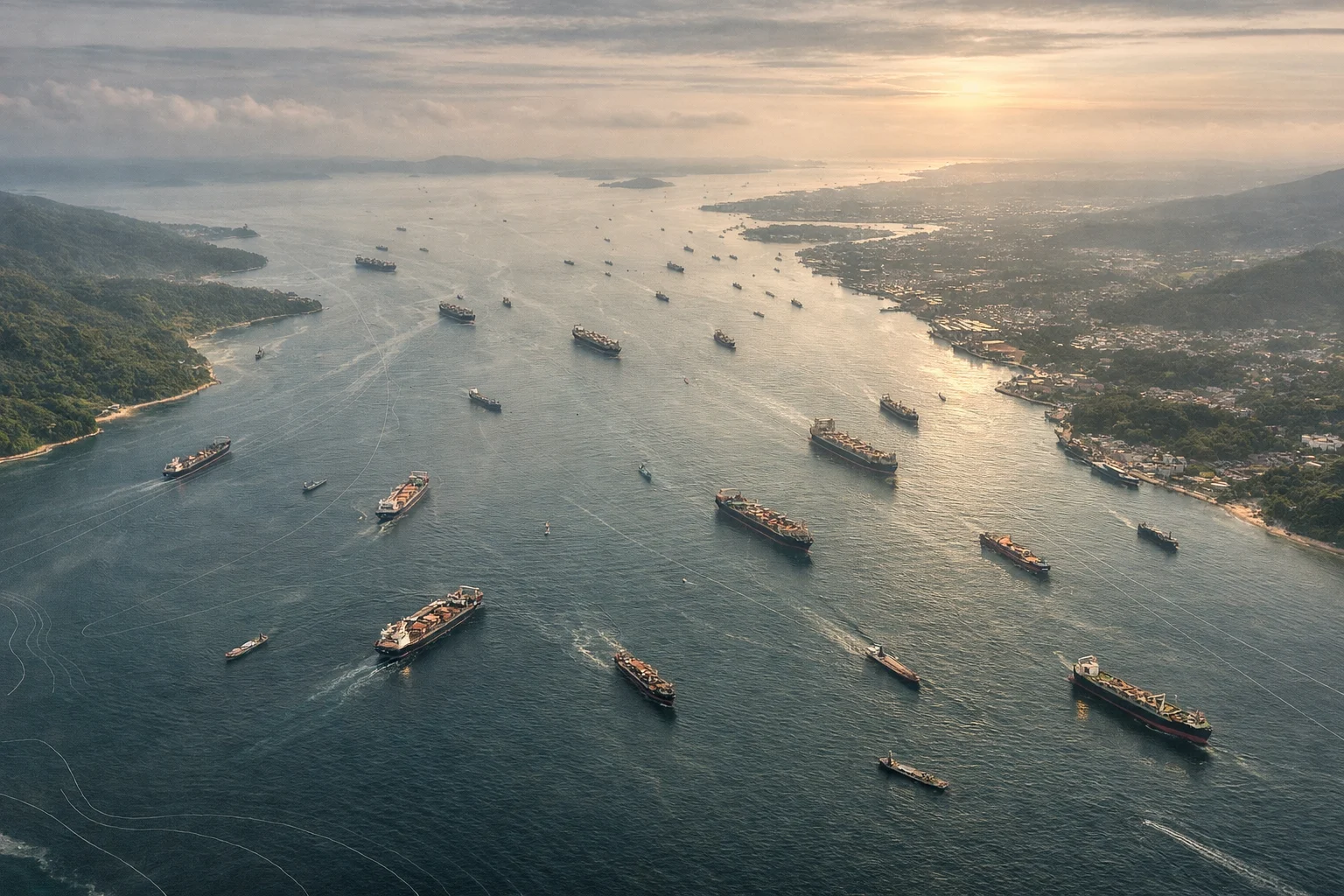
The coup also changed how developing nations approached resource nationalism. Leaders in countries from Venezuela to Indonesia watched what happened to Mosaddegh and drew their own conclusions. Some moved closer to the Soviet Union. Others simply became more guarded about Western investment. The geopolitical consequences spread far beyond the oil sector, touching trade routes like the Strait of Malacca and reshaping the economics of global energy flows.
The Shah’s Regime and Its Contradictions
The Shah the U.S. put back on the throne was no simple puppet — he had his own ambitions and his own brutality. His secret police, SAVAK, was trained partly by the CIA and became notorious for torturing political opponents. The Shah modernized Iran aggressively, but he did so autocratically, crushing dissent and widening inequality.
By the late 1970s, a revolutionary coalition — religious conservatives, leftists, and nationalists — united around one shared grievance: the Shah was a Western creation who served Western interests. When the Iranian Revolution overthrew him in 1979, it wasn’t just a change of government. It was, in part, a delayed repudiation of the 1953 coup.
What Common Misconceptions Surround Operation Ajax?
One of the most persistent myths is that the coup was entirely an American operation. In reality, British intelligence — specifically MI6 — designed the original plan and brought it to Washington. The CIA initially hesitated. It was British lobbying, framed around Cold War fears rather than oil profits, that convinced the Eisenhower administration to sign on.
Another misconception is that Mosaddegh’s government was fragile and unpopular. It wasn’t. He won a referendum in August 1953 — just days before the coup — with an implausibly high majority, suggesting both genuine support and some manipulation on his side. But even accounting for that, he commanded real popular loyalty. The coup required sustained foreign intervention to succeed, not just a gentle nudge.
A third myth: that the U.S. government kept Operation Ajax secret for only a short time. In fact, the CIA didn’t officially acknowledge its role until 2013 — sixty years after the fact — when declassified documents confirmed what historians had long argued. The delayed admission matters because it shaped how the U.S. officially discussed Iran for six decades, always omitting the 1953 context that Iranians never forgot. This kind of historical erasure has parallels in other covert histories, from the Berlin Airlift era to more recent intelligence operations.
What Were the Long-Term Benefits and Costs for American Oil Interests?
In the short term, American oil companies gained enormous benefits. Access to Iranian crude at favorable terms, a strategic foothold in the Persian Gulf, and the precedent that U.S. covert power could protect corporate interests abroad — these were real gains, measured in billions of dollars and barrels of oil.
But the long-term costs were staggering. The 1979 Iranian Revolution didn’t just overthrow the Shah — it nationalized the oil industry (again, this time permanently), cost U.S. companies their Iranian contracts, and turned Iran into a hostile regional power that has complicated American foreign policy ever since. The hostage crisis, the Iran-Iraq war, decades of sanctions, the nuclear standoff — all of these trace at least partial roots back to 1953.
There’s also the broader cost to American credibility in the developing world. The coup became Exhibit A in the argument that U.S. democracy promotion was hypocritical — that Washington would support democratic governments only when it was convenient. This credibility gap haunted American foreign policy through the Cold War and beyond, making it harder to build genuine alliances in the Global South.
It’s worth comparing this to other moments of strategic overreach. The way control over narrow passages can define geopolitical power — as seen in the Suez Canal’s role in global shipping — shows how energy routes and political power have always been inseparable.
How Does the 1953 Coup Connect to Today’s Energy Markets?
The coup helped birth the modern global oil order — and some of its defining features are still with us. OPEC, founded in 1960, was a direct response to the kind of Western control over oil pricing that the 1953 coup preserved. Its founding members — Iran, Iraq, Saudi Arabia, Kuwait, and Venezuela — all shared a grievance: Western companies set prices, extracted profits, and left producing nations with relatively little leverage.
OPEC changed that calculus, and the 1973 oil embargo showed just how much leverage organized producers could wield. But the vulnerability of oil markets to political shocks — which every American driver has felt at the pump — is a direct legacy of the instability that covert operations like Ajax helped create.
Today, Iran remains outside the global oil trading system in meaningful ways, thanks to decades of sanctions rooted in hostility that began, arguably, with a coup in 1953. If Iranian oil were freely tradeable on global markets, estimates suggest it could add millions of barrels per day to supply — enough to meaningfully move prices. The geopolitical history of a single covert operation still shapes the price you pay every time you fill your tank.
The pattern of hidden forces shaping what seem like natural market outcomes appears throughout history. Think of how West Africa’s Ghana Empire once set gold prices for the medieval world — control over supply has always meant control over power. Or consider how the kingdom of Mali’s gold wealth shaped entire trade networks across continents. Resource control and political power have always been inseparable.
Even the infrastructure of how we record and transmit power matters. The birth of writing systems emerged precisely because early states needed to track resources and assert authority — a dynamic that the 1953 coup updated for the oil age. And just as ancient powers used optical signals to project control over distant territories, the CIA in 1953 projected American power through covert networks rather than armies.
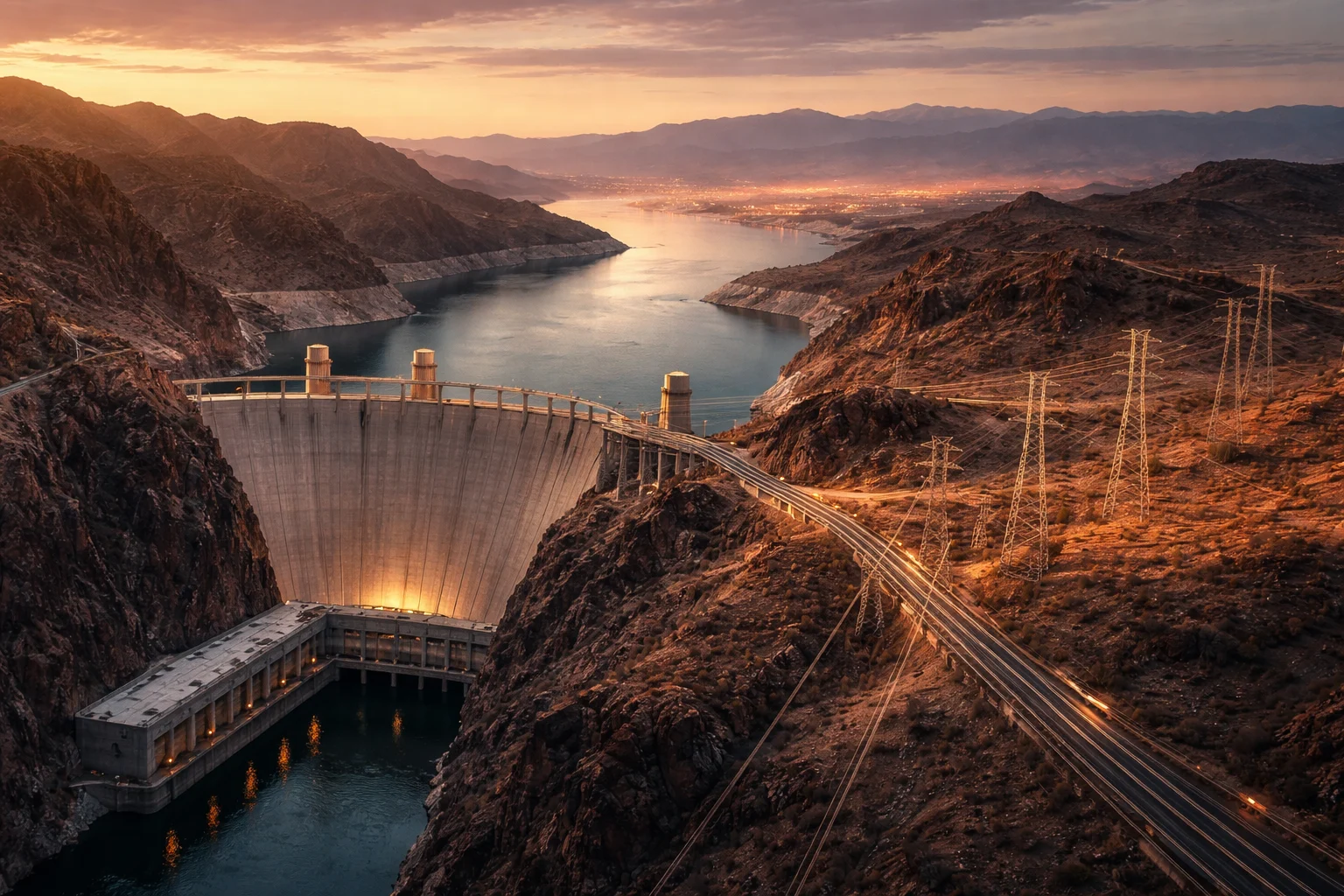
The coup also intersects with broader questions about how geography shapes destiny. The power politics behind Hoover Dam show how energy infrastructure has always been about more than electricity — it’s about who gets to define development. Similarly, the Interstate Highway System wasn’t just a transportation project — it was a geopolitical one, designed partly to move military assets. Energy and infrastructure have always served power first.
For a sense of how revolutionary ideas spread and take root in unexpected places, consider how the French Revolution’s metric system rewired daily life across the globe — or how Gutenberg’s printing press enabled the kind of mass political communication that Mosaddegh himself used to build his nationalist movement.
The CIA Iran coup of 1953 wasn’t just a Cold War footnote. It was a hinge point — a moment when the old colonial model of resource extraction reinvented itself in covert clothing, and when the seeds of today’s Middle East volatility were planted with American hands. Understanding it means understanding not just history, but the world you’re living in right now, every time the news cycles back to Iran, oil, or American credibility abroad. The past, in this case, is very much still present.