Petra Rock Carved City: How Nabataeans Controlled Trade
Petra Rock Carved City was more than an icon carved in sandstone. It was the Nabataean engine that routed goods, taxes, and influence across Arabia and the Mediterranean. This article follows how Petra turned geography into power. For background on monumental fame, see the story of ancient wonders, and for the regional chessboard after Alexander, revisit Gaugamela’s decisive legacy.
Historical Context
From Nomads to Middlemen
The Nabataeans likely began as mobile pastoralists trading aromatics and livestock. By the third–second century BCE, they had settled and consolidated routes linking southern Arabia with the Levant. The Hellenistic world opened new markets, coinage, and tastes. Greek and Near Eastern styles mingled in temples and tombs. Everyday life also shifted toward urban rhythms; for a light cultural window on that era, explore how ancient Greeks sought leisure. Against this backdrop, Petra Rock Carved City grew into a logistical hub where camel caravans could be taxed, watered, and protected. The city’s rise shows how mobility, then settlement, creates durable commercial control.
A City at the Crossroads
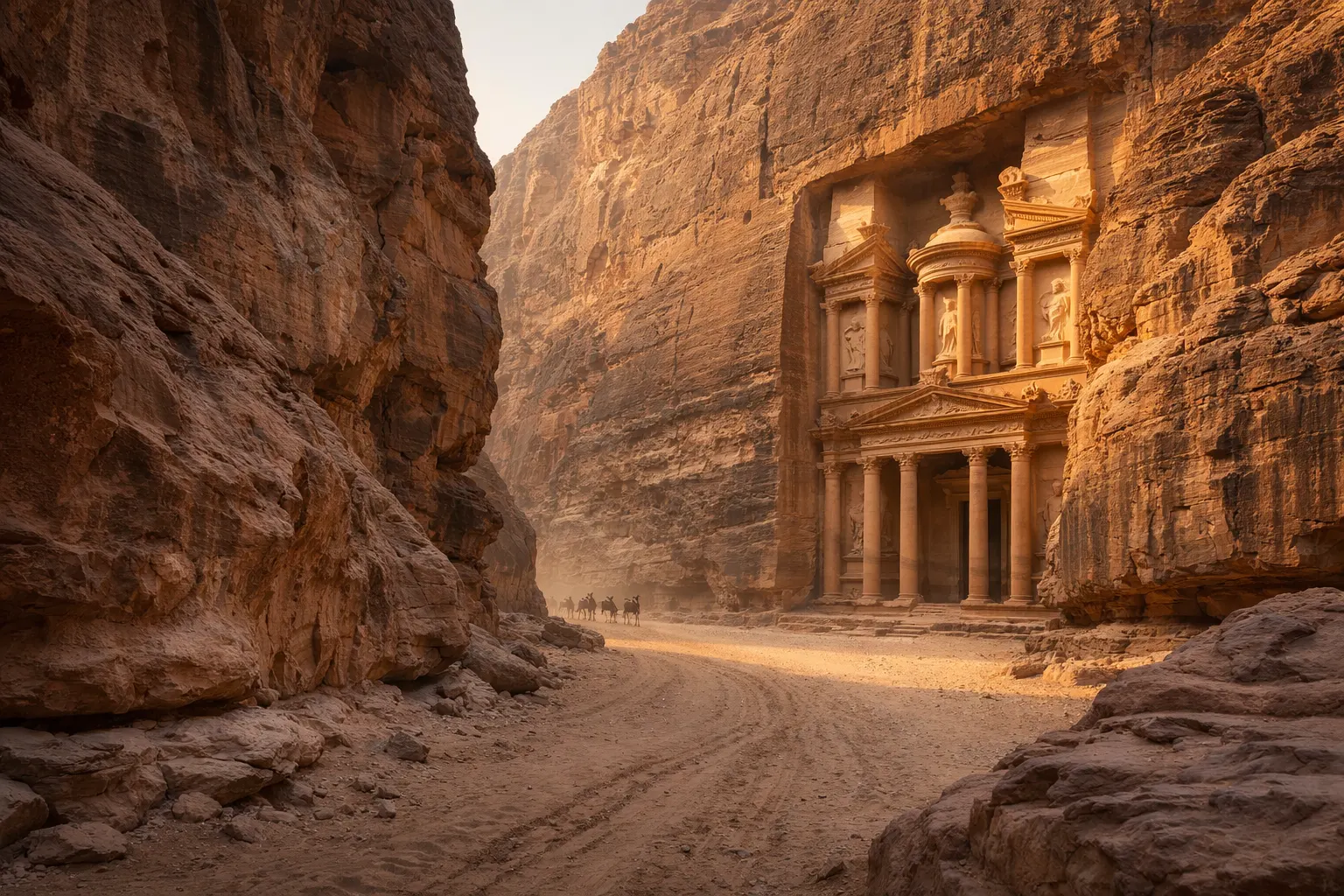
Petra sat between the Red Sea and the Syrian oasis belt, with tracks pulling north toward Damascus and west to Gaza. The Siq gorge provided a narrow entrance, easy to watch and hard to assault. Caravans laden with frankincense, myrrh, spices, and textiles funneled through checkpoints and plazas. After Rome absorbed the region, the frontier hardened, and nearby Judea saw dramatic sieges. For that context, see the Siege of Masada. Yet the city’s heart stayed commercial: a place to negotiate rates, pay duties, and time departures to beat heat, flash floods, or bandits.
Key Facts and Eyewitness Sources
Caravans, Tariffs, and a Negotiated Monopoly
Nabataean power rested on three levers. First, caravans. Camels transformed deserts into highways, carrying heavy loads over long distances on predictable schedules. Second, tariffs. Duties on goods generated revenue without heavy bureaucracy. Third, negotiation. The Nabataeans bargained with tribes, oasis towns, and imperial neighbors to keep corridors safe. Petra Rock Carved City supplied water, fodder, storage, and credit instruments that made transactions stick. Coins bearing kings’ profiles signaled political confidence. We do not have a single “toll book,” but inscriptions, coins, and classical authors converge on a picture of deliberate, regulated movement.
Water, Security, and the Spectacle of Stone
Carved facades were more than status. They broadcast stability to merchants deciding where to entrust fortunes. Behind the beauty lay engineering: channels cut into rock, covered pipelines, settling basins, and vast cisterns that banked seasonal rains. These systems reduced risk and allowed year-round traffic. The UNESCO listing recognizes this blend of art and infrastructure; see UNESCO’s Petra page for an overview. In a world of dunes and droughts, a city that could promise water, storage, and contracts became a magnet. Security forces and alliances did the rest, discouraging raiders and ensuring that those who paid the tolls kept profits.
Analysis / Implications
Network Effects in the Desert
Merchants prefer predictable routes. The more traders choose a corridor, the more services appear, lowering costs and attracting more traders. Petra Rock Carved City exploited this compounding dynamic. Every new cistern, caravanserai, and weigh station sharpened the city’s advantage. Even Rome found it easier to tap Nabataean systems than to rebuild them. When Emperor Trajan annexed the kingdom in 106 CE, creating Arabia Petraea, the network largely kept humming under new management. That continuity shows how robust commercial systems can outlast political transitions when incentives align.
Law, Reputation, and Soft Power
Trade runs on trust. Contracts mean little without enforcement. The Nabataeans cultivated a reputation for order and timely redress. After annexation, Roman procedures overlapped with local practice. For a wider sense of how Roman law tackled public order and compliance, see how ancient Rome managed crime. In effect, Petra turned norms, escorts, and courts into soft power. Merchants routed through those who kept them safe and made them whole. That quiet legitimacy may be the most durable part of their legacy.
Case Studies and Key Examples
The Incense Road and the Red Sea Gate
Consider the incense road from the Hadramawt and Qataban valleys. Loads moved northwest via oases like Najran and then to Hegra (Madā’in Ṣāliḥ), a sister Nabataean center. From there, caravans cut toward Petra or angled to the Red Sea. The port of Aila (modern Aqaba) linked the city to Nilotic and Mediterranean shipping. Coastal marts such as Leuke Kome helped the Nabataeans skim sea-borne trade too. Services at Petra Rock Carved City coordinated sea and land timetables, giving traders flexible options. For travel context and planning, Jordan’s official overview of Petra is helpful at VisitJordan.
The Aila–Gaza–Damascus Triangle
Another lens is a triangle of markets: Aila for maritime exchanges, Gaza for Mediterranean exports, Damascus for Syrian and Mesopotamian links. Petra lay near the triangle’s interior, where many paths converged. That proximity simplified arbitrage. Caravans could reroute quickly when prices moved. Storage caves and courtyards held surplus until demand rose. In long-horizon trade, those options matter. They shorten delays and cut losses from missed convoys. As with legendary narratives about East–West exchange, myths often mask logistics; for a broader cultural prelude, see whether the Trojan War really happened and how such stories shape ideas of routes and rivals.
Conclusion
Petra’s power was never only in stone. It was in routes planned like ledgers, in water engineered like credit, and in trust brokered like law. The Nabataeans used geography, diplomacy, and infrastructure to turn a desert crossroads into a customs empire. Even today, Petra Rock Carved City teaches how to control flow rather than territory. In a world of supply chains and chokepoints, that lesson still resonates. For the city’s modern status among celebrated monuments, compare the New 7 Wonders landscape. And for a glimpse of Rome’s volcanic urban hazards—reminders of a wider world that Petra once traded with—consider the Great Fire of Rome.